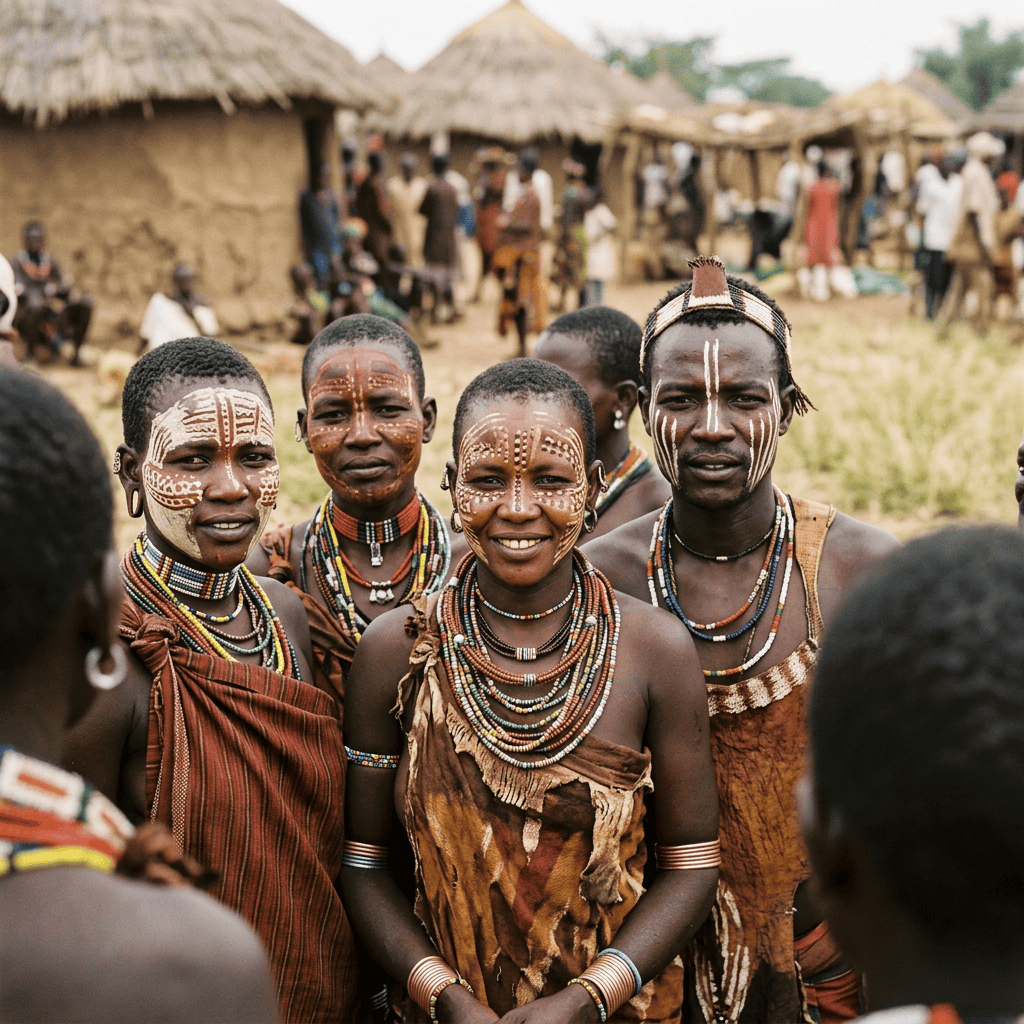
For thousands of years, face markings have been an important aspect of identity, culture, spirituality and social organisation across many African societies. Long before modern identification systems, face markings served as visual expressions of community belonging, family heritage, social status and personal achievement. While often misunderstood by outsiders, these markings represent a rich cultural tradition rooted in history, symbolism and identity.
What Are Face Markings?
Face markings, sometimes referred to as facial scarification, tribal marks or facial inscriptions, are deliberate patterns created on the face using cuts, incisions, tattoos, paint or other traditional methods. In many African societies, these markings were made during childhood, adolescence or important rites of passage.
Unlike decorative body art in modern society, traditional African face markings often carried deep social and cultural significance. They communicated information about a person’s tribe, clan, lineage, age group, social rank, marital status, profession or spiritual affiliation and each mark told a story.
Why Were Face Markings Originally Used?
1. Tribal Identification
One of the most important purposes of facial markings was identification.
In times when kingdoms, empires and tribal nations occupied vast territories, facial markings made it easy to distinguish members of different ethnic groups, they acted almost like cultural passports.
During periods of migration, trade or conflict, an individual’s markings could immediately reveal where they came from and who their people were.
2. Protection Against Slavery
Historical accounts suggest that some African communities used distinctive tribal markings to identify family members who had been separated during slave raids and the Transatlantic Slave Trade.
In certain regions, marks helped surviving relatives recognise one another even after years of separation. They also served as evidence of community belonging should individuals return home.
3. Spiritual Protection
Many African societies believed facial markings carried spiritual significance.
Marks were sometimes made during naming ceremonies or initiation rites to invoke ancestral protection, ward off evil spirits or demonstrate devotion to particular deities.
Some communities believed specific patterns could provide blessings, health and protection throughout life.
4. Beauty and Social Acceptance
In numerous African cultures, facial marks were considered attractive and desirable. Beauty standards vary across societies, and in some regions carefully designed facial patterns were seen as enhancing physical appearance. Individuals with respected tribal markings were often viewed as more culturally complete and socially accepted.
5. Rites of Passage
Among many ethnic groups, receiving facial markings signified the transition from childhood to adulthood.
The process demonstrated courage, endurance and commitment to the community. Successfully completing the ritual earned individuals respect and recognition as full members of society.
Face Markings Among Different African Tribes
The Yoruba of Nigeria
The Yoruba people developed some of the most recognised tribal marking traditions in West Africa.
Known as ila, Yoruba facial marks varied between towns, lineages and families. Common styles included:
Gombo: three vertical marks on each cheek.
Pele: a set of horizontal facial lines.
Ture: marks extending across the facial region.
Abaja: multiple parallel lines on both cheeks.
These markings identified a person’s ancestral hometown and family line. They also functioned as symbols of honour, belonging and cultural pride.
Today, tribal marking practices among the Yoruba have significantly declined due to urbanisation, modern education and changing attitudes.
The Hausa and Fulani
Among certain Hausa and Fulani communities of West Africa, facial markings were less extensive than among the Yoruba but still carried social and cultural significance.
Marks often served purposes of beauty, identification and healing. Some women wore delicate facial patterns that symbolised elegance, maturity and cultural identity.
The Dinka of South Sudan
The Dinka people are well known for forehead scarification patterns.
Young men often received a series of parallel lines across the forehead as part of their initiation into adulthood.
These marks symbolised:
Courage
Strength
Endurance
Readiness for adult responsibilities
The process was often regarded as one of the most important milestones in a young man’s life.
The Nuer of South Sudan
Like their Dinka neighbours, the Nuer traditionally practised forehead scarification.
Patterns varied between clans but generally represented tribal identity and manhood. The markings demonstrated resilience and a willingness to embrace community values.
The Shilluk of South Sudan
Among the Shilluk people, facial markings symbolised clan identity and social belonging.
These scarification patterns connected individuals to their ancestry and reinforced communal relationships across generations.
The Karo of Ethiopia
The Karo people are famous for artistic body and face decoration.
Unlike permanent scarification, many Karo designs involve painting intricate patterns using white chalk, red ochre, charcoal and natural pigments.
Their facial designs often celebrate ceremonies, festivals and social occasions while expressing beauty, creativity and cultural pride.
The Mursi and Surma of Ethiopia
The Mursi and Surma peoples practise various forms of body modification, including scarification.
For women especially, scarification patterns can represent beauty, maturity and personal achievement. The designs often reflect cultural values surrounding femininity and social standing.
The Berber (Amazigh) Peoples of North Africa
Among Amazigh communities in Morocco, Algeria and neighbouring regions, facial tattooing has historically played an important role.
Women often wore symbolic markings on:
The chin
Forehead
Cheeks
These tattoos could represent:
Fertility
Protection
Marriage
Tribal affiliation
Spiritual beliefs
Many of these traditions have faded, but they remain powerful symbols of Amazigh heritage.
Face Markings in the African Diaspora (Afroglobal Communities)
The African diaspora has preserved aspects of face-marking traditions in different ways.
Afro-Brazilian Traditions
In Brazil, descendants of enslaved Africans carried memories of scarification, body markings and ritual symbolism from West and Central Africa.
While permanent facial scarification became less common, symbolic markings survived through religious traditions such as Candomblé and cultural celebrations that honour African ancestry.
Afro-Caribbean Communities
Across Jamaica, Haiti, Trinidad and other Caribbean nations, physical scarification practices largely diminished over time.
However, facial decoration, ceremonial body art and symbolic markings continue to appear during cultural festivals and spiritual ceremonies inspired by African heritage.
Contemporary African Diaspora Identity
Today, many Afroglobal communities reconnect with ancestral face-marking traditions through:
Artistic self-expression
Fashion photography
Cultural festivals
Historical education
Digital art
Traditional body painting
Rather than permanent scarification, modern expressions often use temporary designs that celebrate heritage while adapting to contemporary lifestyles.
The Decline of Traditional Face Markings
Several factors contributed to the decline of facial marking traditions across Africa:
Urbanisation
Formal education systems
Religious influences
Government regulations
Globalisation
Modern beauty standards
Human rights concerns regarding child consent
In many countries, younger generations no longer receive traditional facial marks. Nevertheless, older community members continue to preserve the history and significance behind these cultural practices.
Modern Perspectives
Today, face markings are increasingly viewed as important cultural heritage rather than everyday social practice.
Museums, historians, anthropologists and cultural organisations document these traditions to ensure that future generations understand their meaning and significance.
For many Africans and people of African descent, traditional face markings remain a powerful reminder of ancestry, resilience, belonging and identity.
Face markings are far more than physical designs on the skin. They represent centuries of history, identity and cultural knowledge passed from one generation to the next. Across Africa, from the Yoruba of Nigeria to the Dinka of South Sudan and the Amazigh peoples of North Africa, facial markings served as symbols of family, community, spirituality, beauty and belonging.
Although the practice has declined in many regions, its legacy lives on. In Africa and throughout the Afroglobal world, face markings remain powerful cultural symbols that remind people of who they are, where they come from and the enduring strength of their heritage.
By George Tetteh