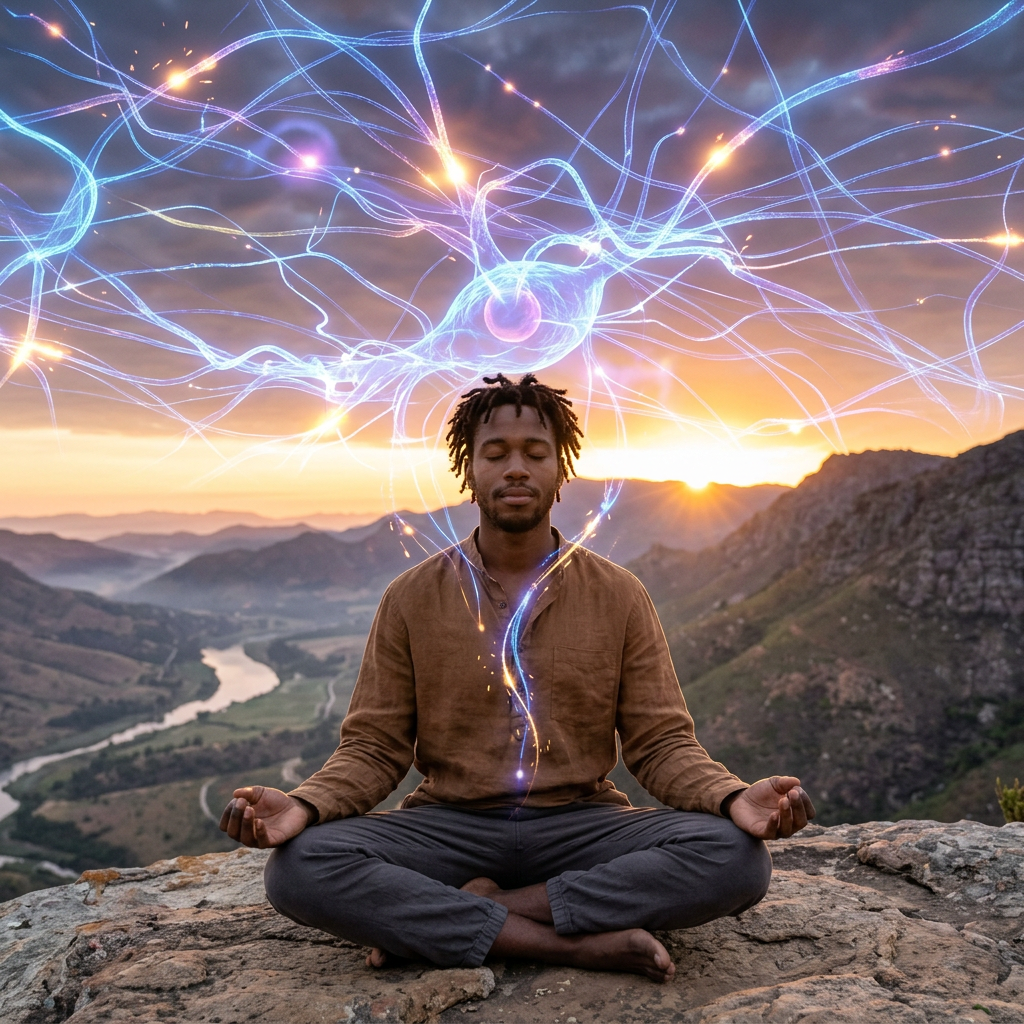
Prayer and meditation are two of humanity’s oldest practices, found in every world religion, every culture, and every era. What’s remarkable is that modern neuroscience now confirms what spiritual traditions have taught for thousands of years: when you pray or meditate, your brain changes in powerful, measurable, and healing ways.
What Happens to the Brain When You Pray or Meditate
Prayer and meditation activate some of the most important regions of the brain, the areas responsible for peace, emotional regulation, empathy, memory, and decision‑making. Scientists call this the “neurobiology of spirituality.”
The Prefrontal Cortex: Your Clarity Centre
When you pray or meditate, the prefrontal cortex, the part of the brain responsible for focus, logic, and decision‑making, becomes more active. This helps you think clearly, make better choices, and calm racing thoughts.
The Amygdala: Your Stress Alarm
The amygdala, which triggers fear and stress, becomes less active. This is why prayer and meditation reduce anxiety and help you feel safe.
The Anterior Cingulate Cortex: Your Compassion Centre
This region lights up during spiritual practices, increasing empathy, forgiveness, and emotional resilience.
The Hippocampus: Your Memory and Healing Centre
Meditation increases the thickness of the hippocampus, improving memory and emotional balance.
These effects have been shown in multiple studies, including research from Harvard, Yale, and the University of Pennsylvania.
Scientific Evidence
Prayer and meditation lower cortisol, the stress hormones
They increase serotonin and dopamine, the “feel‑good” chemicals
They strengthen neural pathways, improving emotional stability
They slow down ageing in the brain, protecting memory
They reduce inflammation, which is linked to many illnesses
They improve sleep, mood, and overall wellbeing
In short: your brain becomes calmer, clearer, and healthier.
Prayer and Meditation in World Religions
Every major religion teaches some form of prayer or meditation , and neuroscience shows they all activate similar brain pathways.
Christianity
Prayer, contemplation, and worship activate deep emotional regulation and gratitude circuits.
Islam
Salah (prayer) and dhikr (remembrance) create rhythmic breathing and focus, calming the nervous system.
Judaism
Kavanah (intentional prayer) strengthens mindfulness and emotional awareness.
Hinduism
Mantra meditation and breathwork activate the prefrontal cortex and reduce stress.
Buddhism
Mindfulness and compassion meditation reshape the brain’s emotional centres.
Sikhism
Simran (meditative repetition of God’s name) increases calmness and focus.
Indigenous African and Afroglobal traditions
Chanting, drumming, and spiritual reflection regulate breathing and create deep emotional grounding.
Native American traditions
Prayer, stillness, and connection to nature activate the brain’s relaxation response.
Across all cultures, prayer and meditation serve the same purpose: to connect, to calm, to heal, and to elevate the mind.
Why It’s Good to Pray
Prayer is more than words , it’s a neurological reset.
Prayer calms the mind
It reduces stress and anxiety by quieting the amygdala.
Prayer strengthens emotional resilience
It activates brain regions linked to hope, optimism, and courage.
Prayer improves relationships
It increases empathy and compassion.
Prayer boosts mental clarity
It activates the prefrontal cortex, helping you think clearly.
Prayer creates meaning
Humans thrive when they feel connected to something bigger than themselves.
Prayer improves physical health
Lower stress = better immunity, better sleep, better heart health.
Prayer builds discipline
Regular spiritual practice strengthens neural pathways linked to self‑control.
The above highlights that, prayer is not just spiritual, it is scientifically beneficial.
Why Meditation Works
Meditation is prayer’s scientific twin. It:
Slows breathing
Regulates heart rate
Reduces stress hormones
Improves focus
Enhances emotional balance
Strengthens the brain’s structure
Meditation and prayer activate similar brain networks , one through silence, the other through intention.
Whether you pray, meditate, chant, breathe, or sit in stillness, you are doing something extraordinary: you are reshaping your brain, healing your emotions, and connecting to the deepest parts of yourself.
Every world religion teaches it. Modern science proves it. And humanity has always needed it.
Prayer and meditation are not just spiritual practices, they are neuroscientific gifts that help us live calmer, clearer, healthier, and more connected lives.
By Diana Heckman