Every October, Black History Month is celebrated across the United Kingdom and we are coming to the end of the month. During this month schools host workshops, organisations hold events, museums present exhibitions, and communities come together to honour the achievements, contributions, and experiences of people of African and Caribbean heritage.
Yet Black history is far too rich, too influential, and too important to be confined to just one month of the year.
For the Afroglobal community, Black history is not a seasonal conversation. It is a living story that stretches across continents, generations, cultures, and communities. It is a story that continues to shape Britain and the world today.
How Black History Month Started in the UK
Black History Month was first celebrated in the United Kingdom in October 1987. It was pioneered by Akyaaba Addai-Sebo, a Ghanaian-born pan-African activist who worked within the Greater London Council’s Ethnic Minorities Unit. The inspiration came from concerns about identity and self-worth among Black children growing up in Britain. Addai-Sebo recognised that many young people were being raised without knowledge of Africa’s contributions to world civilisation and without positive representations of their heritage. Drawing inspiration from Black History Month in the United States, which itself grew from historian Carter G. Woodson’s “Negro History Week” initiative, Addai-Sebo envisioned a UK movement that would celebrate the achievements of Africa, Africans, and people of African descent throughout history.
The Key Figures Behind Its Formation
While Akyaaba Addai-Sebo is widely recognised as the architect of Black History Month in Britain, he was supported by several influential figures and organisations. These included Ansel Wong, Head of the Ethnic Minorities Unit, and Ken Livingstone, then leader of the Greater London Council. Their support helped transform an idea into a national movement. The first official celebration was launched in October 1987 and quickly gained momentum throughout the country. What began as a response to underrepresentation evolved into a nationwide educational and cultural movement.
Why October?
Unlike the United States, where Black History Month is observed in February, Britain chose October. According to Addai-Sebo, October was selected because it coincided with the beginning of the academic year, allowing schools and young people to engage fully with the programme after the summer break. The focus was clear from the beginning: empowering future generations through knowledge, identity, and pride.
How Black History Month Has Evolved
In its early years, Black History Month focused heavily on raising awareness of historical figures and correcting omissions within mainstream education.
Today, it has evolved into something much broader.
The month now celebrates:
Black British history.
African and Caribbean heritage.
Arts, culture, literature, and music.
Social justice movements.
Entrepreneurship and innovation.
Contemporary achievements alongside historical contributions.
Importantly, Black History Month has also encouraged conversations about Britain’s links to Africa, colonialism, migration, identity, and belonging, however, despite this progress, many stories remain untold.
Why Black History Should Not Be Celebrated Only Once a Month
One of the greatest criticisms of Black History Month is that it can sometimes unintentionally suggest that Black history exists separately from mainstream history, the truth is that Black history is British history.
The contributions of African and Caribbean people have shaped Britain for centuries, from abolitionists to soldiers, nurses to inventors, artists to entrepreneurs, Black people have been integral to the story of this nation, therfore celebrating Black history only in October risks reducing a continuous legacy to a temporary event, a history does not pause on 1 November.
The achievements of Mary Seacole, Olaudah Equiano, Claudia Jones, and countless others remain relevant every day of the year. Black history should be embedded within education, media, publishing, business, and public discourse throughout all twelve months as a community cannot truly know where it is going unless it understands where it has come from.
Why Your Magazine Matters
This is precisely why Your Magazine is so significant, becuase for generations, many of our stories have been filtered through external perspectives. Too often, narratives about people of African heritage have been shaped by those outside our communities and Your Magazine exists to change that.
Our mission is simple but powerful:
Our history, our voices, our perspective.
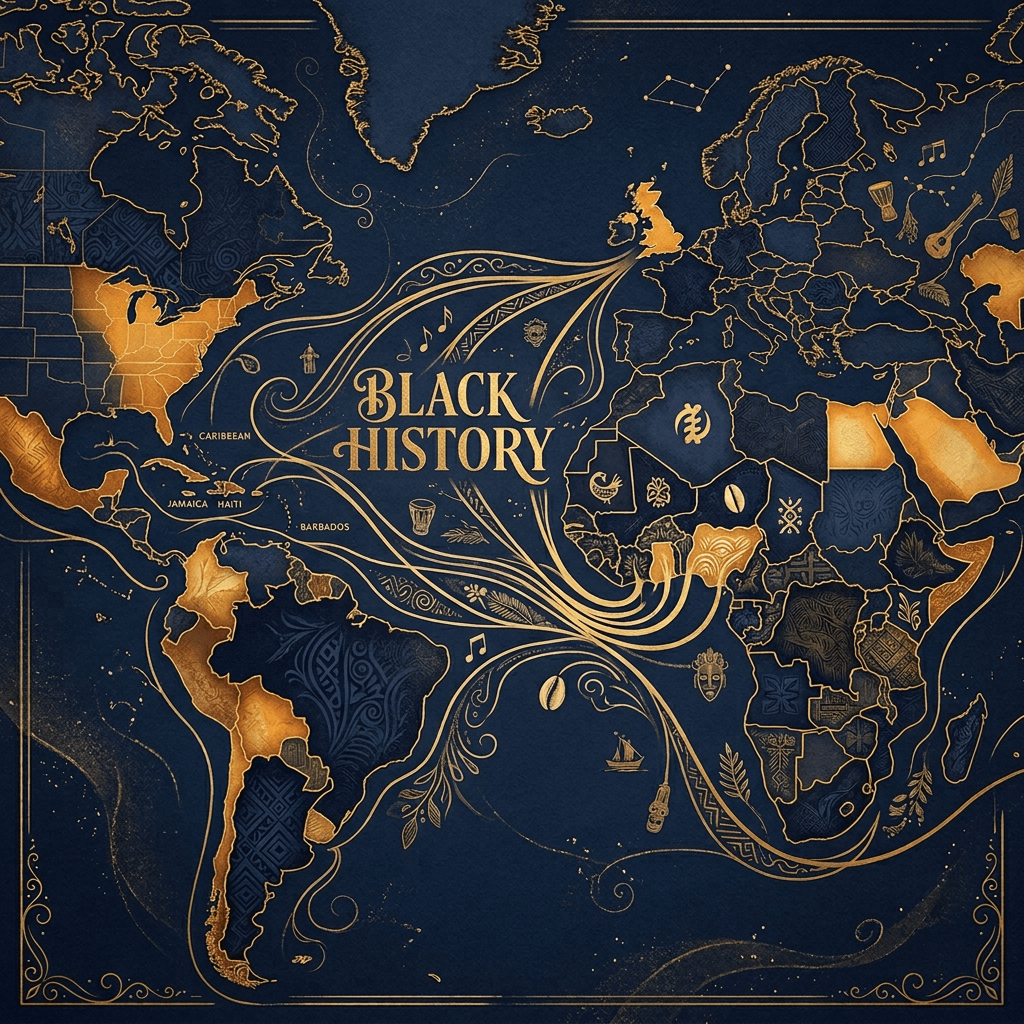
We provide a platform where Afroglobal stories are documented, celebrated, and preserved by people who understand their depth, context, and significance. We do not merely report on our communities, we represent them. We recognise that the Afroglobal experience is diverse, spanning Africa, the Caribbean, Europe, North America, South America, and beyond. Yet despite our different journeys, we remain connected by shared heritage, common aspirations, and a collective future.
Through our articles and features, we seek to archive the stories often overlooked elsewhere and create a living record for future generations.
The Significance of the Term “Afroglobal”
At Rocks PR, we pioneered the term Afroglobal as a way of uniting and connecting people of African heritage worldwide.
The word reflects a reality that many traditional labels fail to capture.
Today, African heritage is not confined by geography;
Our communities are global.
Whether someone lives in Lagos, Kingston, London, Toronto, Johannesburg, Atlanta, Paris, or Accra, there are cultural threads, values, histories, and experiences that connect us.
Afroglobal represents:
Unity without uniformity.
Connection without borders.
Identity without limitation.
Pride rooted in heritage and open to the world.
The term creates a framework through which we can celebrate our diversity while recognising our shared journey.
In a world that often seeks to divide, Afroglobal seeks to connect.
Why People Should Read and Support Our Mission
Supporting Your Magazine is about more than reading articles, it is about investing in the preservation of our stories, it is about ensuring that future generations inherit narratives that are authentic, balanced, inspiring, and representative. When readers support Your Magazine, they help:
Preserve Afroglobal history.
Promote positive representation.
Amplify underrepresented voices.
Celebrate achievement and cultural excellence.
Strengthen community connections worldwide.
Inspire younger generations through knowledge and pride.
Most importantly, they help ensure that our history remains ours to tell.
Black History Month remains one of the most important cultural and educational movements in modern Britain. Its founders understood that knowledge of history strengthens identity, confidence, and community, yet the vision was never intended to last for only one month.
The true purpose of Black History Month is to inspire year-round recognition, learning, and celebration. At Your Magazine, we embrace that responsibility every day, through the lens of the Afroglobal nation, we tell the stories that deserve to be remembered, celebrate the people who deserve to be recognised, and create a platform where our history is preserved with authenticity and pride, because when history is told by us, it does more than inform, it empowers, and when the Afroglobal community knows its story, it strengthens its future.
By Emma Harding