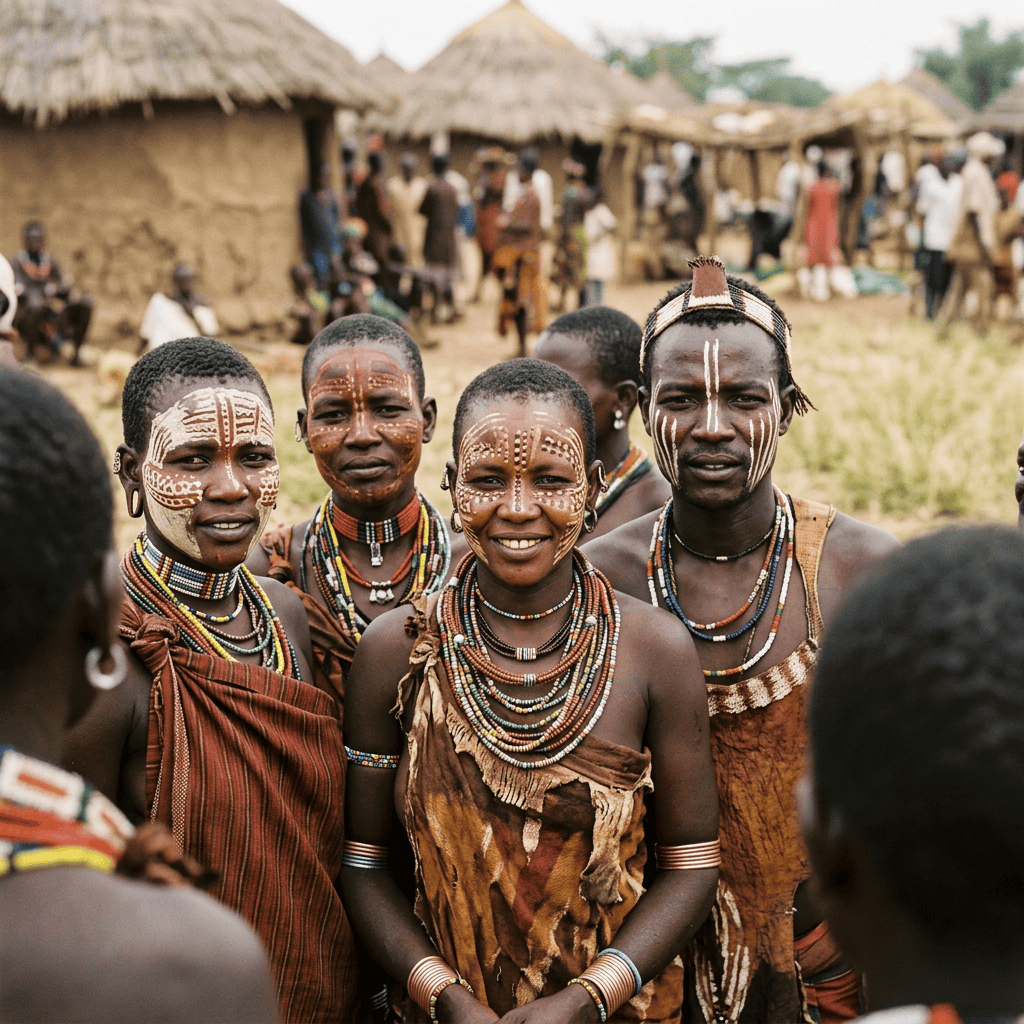
Africa has always been a wellspring of creativity, a continent whose visual languages, textiles, symbols, and craftsmanship have shaped global aesthetics for centuries. Yet many of the world’s most iconic luxury fashion houses have drawn heavily from African design traditions without attribution, compensation, or recognition.
Understanding this history is not about blame, it is about power.
It is about reclaiming the truth:
Africa influences the world.
Africa inspires the world.
Africa is the blueprint.
And when we know this, we walk taller.
Africa’s Design DNA in Global Luxury Fashion
Africa’s visual languages are some of the oldest in human history.
From Nsibidi in Nigeria to Kuba cloth in Congo to Habesha Kemis in Ethiopia, African design systems predate European luxury houses by hundreds, sometimes thousands of years.
Let’s break down some of the most striking examples:
Louis Vuitton’s Monogram & Damier Patterns: Echoes of Congo & Nsibidi
The LV Monogram & Damier (Checkerboard)
Louis Vuitton’s two most recognisable patterns, the LV monogram and the Damier checkerboard, are structurally identical to:
Kuba cloth geometric systems from the Congo
Nsibidi ideographic symbols from southeastern Nigeria
West African grid‑based textile traditions
Nsibidi: The Ancient Script Behind Modern Luxury
Nsibidi is a 4,000‑year‑old system of symbols used by the Ejagham, Efik, and Igbo peoples.
It represents: Love, Unity, Strength, Community and Spirituality.
These meanings are embedded in the shapes such as the circles, diamonds, crosses, interlocking lines which are the same shapes echoed in LV’s patterns.
Timeline Comparison
Nsibidi: 2,000–4,000 years old
Kuba cloth: 17th century
LV Damier: 1888
LV Monogram: 1896
Africa’s designs existed centuries to millennia before European fashion houses adopted similar structures.
Yves Saint Laurent’s “L’Afrique” Collection: Directly Pulled From African Designs
Yves Saint Laurent’s 1967 “L’Afrique” collection is widely celebrated, but few acknowledge that many pieces were direct lifts from African textiles, beadwork, and silhouettes.
Fashion historians have noted that:
The colour palettes mirrored Tuareg indigo
The silhouettes echoed North African kaftans
The beadwork resembled Maasai and Fulani jewellery
The patterns reflected West African geometric systems
YSL called it “inspiration.”
But for Africans, it was heritage.
Matthew Williamson & the Habesha Kemis Influence
British designer Matthew Williamson released designs that mirrored the Habesha Kemis, the traditional Ethiopian/Eritrean dress known for:
White cotton
Tibeb woven borders
Cross‑cultural symbolism
The resemblance was so strong that the Ethiopian Intellectual Property Office demanded royalties and recognition.
Why?
Because the designs were culturally specific, the patterns were heritage‑protected, the garments held spiritual and communal meaning
This was one of the rare moments an African institution publicly challenged a global designer, and it set a precedent.
Louis Vuitton’s “Lethuto Blanket Shirts” & Basotho Culture
Louis Vuitton released “Lethuto blanket shirts,” directly inspired by the Basotho blankets worn during coming‑of‑age ceremonies, royal events and cultural rites.
The Basotho blanket is not just clothing, it is identity, status, and ancestral symbolism. Yet the LV version retailed for over £1,500, while original Basotho blankets can cost less than £20
Ghana Must Go” Bags in High Fashion
The iconic red‑blue‑white woven bag, known as “Ghana Must Go” has been reimagined by Balenciaga, Celine,Louis Vuitton and Raf Simons.
The History Behind the Bag
In 1983, Ghanaian migrants were expelled from Nigeria, carrying their belongings in these woven bags. The bag became a symbol of:
Migration
Resilience
Survival
Afroglobal movement
Luxury brands now sell versions for £1,200–£2,000, while the original costs £5 or less.
The Price Gap: A Global Pattern
Luxury houses often sell African‑inspired designs at:
20× to 200× the price of the original
Without credit
Without royalties
Without reinvestment into African communities
This is more than fashion, it is economic extraction. And while these trends confirm Africa’s global influence, and yes, imitation may be flattery, true respect would have included credit and acknowledgement.
Africa Shapes the World
Despite the appropriation, the truth is powerful:
Africa is the creative engine of global culture.
Our patterns, textiles, symbols, colour palettes, silhouettes, craftsmanship
…have shaped the world’s most prestigious fashion houses.
This should not make us angry, it should make us proud.
Because influence is power and Africa has always had it and here is the empowering part:
Recognise Our Influence
When we understand that global fashion is built on African foundations, we walk with confidence.
Celebrate Our Designers
Support African fashion houses who innovate from authenticity.
Buy Original, Not Repackaged
Choose:
Original Basotho blankets
Authentic Habesha Kemis
Real Ghana Must Go bags
Genuine Nsibidi‑inspired artisans
You may not love the idea of wearing a Ghana Must Go bag to a party, but the point is that choosing the original matters, as it ensures we honour African creativity, protect our cultural heritage, and direct payment to the communities that created it.
Let’s also teach the next generation about this heritage because when young Afroglobal creatives know their heritage, they innovate boldly. Let’s remind the next generation and ourselves that:
Africa does not imitate
Africa originates.
Africa does not follow
Africa leads.
Africa does not borrow
Africa inspires.
Our designs, our symbols, our stories, and our creativity have shaped the world’s most powerful fashion houses.
It is time we honour that truth, invest in our own, and ensure that the next generation of African designers are not just the inspiration, they are the owners.
By Fiona Lewis