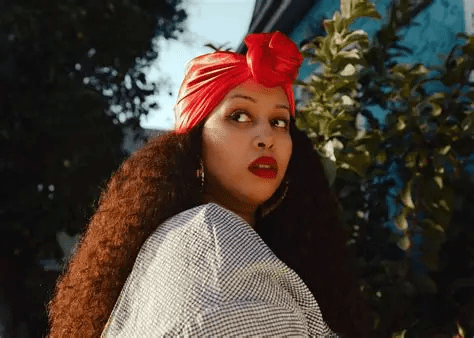
Warsan Shire is one of the most powerful poetic voices of our generation, an Afroglobal woman who writes with the fire of ancestry, the tenderness of memory, and the courage of someone who has lived between worlds. Born in Nairobi in 1988 to Somali parents who fled civil war, she migrated to London at just one year old, growing up between cultures, languages and identities.
Her poetry is not simply written, it is felt. It is carried in the bones of immigrants, whispered by daughters raised between continents, and echoed in the hearts of those who have ever searched for home.
A Childhood Between Worlds
Shire’s early life was shaped by displacement, migration and the quiet resilience of her Somali family. Raised in London, she grew up navigating the duality of being Somali at home and British in the world, a tension that would later become the heartbeat of her poetry.
She studied creative writing at London Metropolitan University, graduating in 2010, and began writing poetry as a teenager, using words to make sense of memory, identity and the emotional landscapes of immigrant life.
The Rise of a Global Voice
Shire’s breakthrough came with her 2011 pamphlet Teaching My Mother How to Give Birth, a haunting, intimate collection exploring womanhood, migration and generational trauma.
Her poem “For Women Who Are Difficult to Love” went viral, resonating with millions of women who saw themselves in her raw, unfiltered truth.
In 2013, she won the inaugural Brunel University African Poetry Prize, and in 2014 she became London’s first Young Poet Laureate, a historic moment for a Somali, Kenyan-born, London-raised Black woman.
Her work has since been translated into multiple languages and published across major literary platforms.
A Cultural Force: From Page to Global Stage
Shire’s poetry reached global audiences when Beyoncé featured her words in the visual album Lemonade (2016) and again in Black Is King (2020).
Her lines are sharp, tender, unforgettable and became part of a cultural moment that celebrated Black womanhood, healing and ancestral memory.
She also wrote the script for Brave Girl Rising, a short film amplifying the voices of Somali girls in one of Africa’s largest refugee camps.
Her Inspirations: Memory, Migration, Womanhood
Shire has said she writes for “people whose voices are generally not heard such as immigrants, refugees, and other marginalized people.”
She draws heavily on:
- Her Somali heritage
- The stories of women in her family
- The emotional weight of migration
- The surrealism of everyday immigrant life, “one day you are drinking mango juice, the next you are in the Underground in London.”
- Memory, her own and those shared with her
Her poetry is a bridge between worlds, a place where the displaced can finally rest.
Why Her Poetry Matters to the Afroglobal Community
Warsan Shire’s work is more than literature, it is testimony for the Afroglobal community, her poetry:
1. Names Our Experiences
She writes about migration, identity, belonging and survival. Themes deeply familiar across the African diaspora.
2. Centres Black Womanhood
Her poems honour the complexity, pain and power of Black women’s lives.
3. Preserves Memory
She captures the stories of mothers, aunties, refugees and daughters, ensuring they are not forgotten.
4. Heals Through Truth
Her words give language to emotions many of us inherited but never articulated.
5. Expands Representation
A Somali-British woman shaping global culture reminds Afroglobal creatives that their stories are worthy, necessary and world-changing.
A Voice That Holds Us Together
Shire’s poetry is a home for the displaced, a mirror for the misunderstood, and a balm for the wounded. She writes with the tenderness of someone who has carried many worlds inside her, and the courage of someone determined to honour them all.
Her work reminds us that:
- Memory is sacred
- Identity is layered
- Pain can be transformed
- Stories can save us
- And poetry can be a place to belong
Warsan Shire is not just a poet.
She is an archivist of emotion.
A cartographer of the immigrant heart.
A voice for the Afroglobal soul.
By Laura Emmerson