
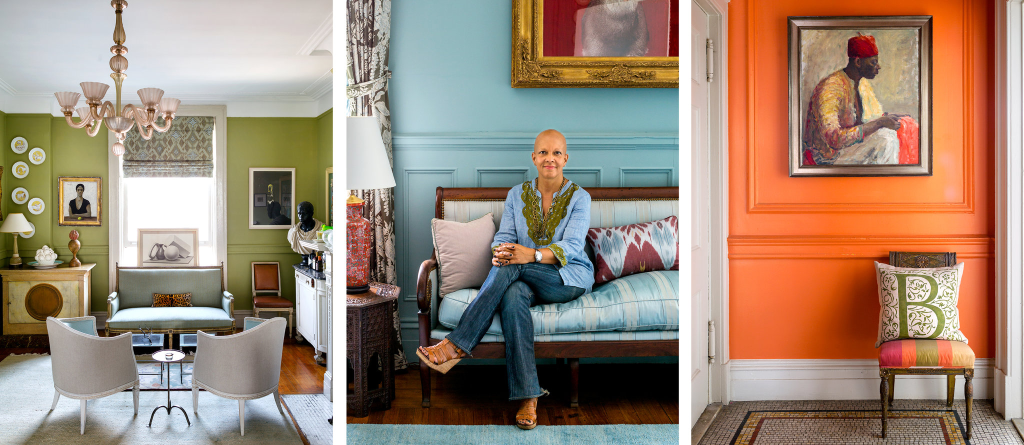
In a world where interior design was once dominated by voices that didn’t reflect the richness of the Afroglobal community, Sheila Bridges stepped forward and changed the narrative. She didn’t just decorate rooms, she reshaped culture, reclaimed identity, and proved that Black creativity belongs at the centre of global design conversations.
Today, Sheila Bridges is celebrated as one of the most influential interior designers in the world. But her journey wasn’t handed to her. It was built through resilience, imagination, and a deep commitment to telling stories that honour Black heritage.
A Journey Rooted in Identity
Sheila Bridges grew up surrounded by creativity. Raised in Philadelphia, she found inspiration in the colours, textures, and cultural rhythms of her community. She studied at Brown University and later at Parsons School of Design, sharpening her craft with discipline and vision.
But her true breakthrough came when she realised something powerful: The world needed interiors that reflected Black life, Black joy, and Black history.
This revelation became the heartbeat of her work.
The Birth of a Cultural Icon: Harlem Toile de Jouy
One of her most iconic creations, Harlem Toile de Jouy, reimagines traditional French toile, a pattern historically filled with white aristocratic scenes and replaces it with imagery of everyday African American life.
It was bold. It was political. It was beautiful.
Harlem Toile became a symbol of cultural reclamation, appearing in museums, homes, and design exhibitions worldwide. It proved that interior design could be a form of storytelling, activism, and empowerment.
Designing for Icons: Her Celebrity Clients
Sheila Bridges’ talent caught the attention of some of the most influential people in the world. Her client list reads like a cultural hall of fame:
President Bill Clinton – She designed interiors for his Harlem office.
Andre Harrell – The legendary music executive behind Uptown Records.
Chris Rock – The globally recognised comedian and actor.
Tom Clancy -Best‑selling author known for his iconic thrillers.
These collaborations didn’t just elevate her career, they cemented her status as a designer who could blend luxury with cultural authenticity.
Why Sheila Bridges Matters to the Afroglobal Community
Sheila Bridges stands as a reminder that Black creativity is limitless. Her work challenges stereotypes, celebrates heritage, and opens doors for future designers across Africa, the Caribbean, and the diaspora.
She shows that:
Afroglobal aesthetics belong in luxury spaces
Cultural storytelling is a design strength
Black designers can lead global conversations
Identity is a source of power, not limitation
Her success is not just personal, it’s communal.
How She Became Who She Is
Sheila Bridges’ rise wasn’t accidental. It was built on:
Vision
She saw beauty where others saw boundaries.
Courage
She dared to centre Black culture in an industry that rarely acknowledged it.
Mastery
Her technical skill, education, and artistic discipline set her apart.
Authenticity
She never diluted her identity to fit into traditional design spaces.
Resilience
She overcame personal challenges, including alopecia, and used them to fuel her advocacy for self‑acceptance and representation.
Her journey is a blueprint for Afroglobal creatives everywhere.
Sheila Bridges teaches us that design is more than decoration, it’s storytelling, healing, and liberation. Her work reminds the Afroglobal community that our culture is worthy of luxury, our stories deserve to be seen, and our creativity can transform the world.
Sheila Bridges didn’t just become a famous interior designer. She became a cultural force. A visionary. A symbol of what happens when Black identity meets fearless creativity.
Her legacy encourages every Afroglobal creative to step boldly into their brilliance, because the world is waiting for the stories only we can tell.
By Michael Frazer


 Your Magazine