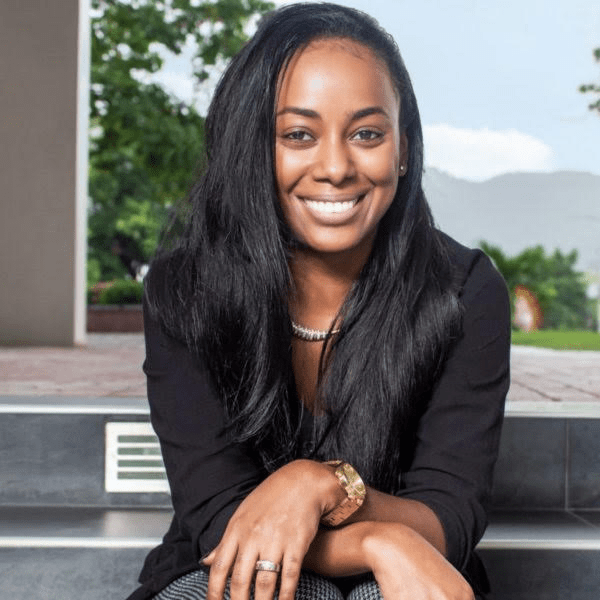
In a world where scientific breakthroughs often emerge from the same familiar corners, Dr. Simone Badal McCreath rises like a fresh Caribbean tide, bold, brilliant, and unapologetically groundbreaking. She is not simply a Jamaican scientist; she is a global force reshaping how the world understands cancer, identity, and representation in medical research.
Her story is one of persistence, innovation, and a deep-rooted belief that science must serve everyone, especially those historically left out of the global narrative. It is no surprise we want to celebrate her as a modern icon of Afroglobal excellence, scientific courage, and Caribbean genius.
A Vision Born in Jamaica, Built for the World
Dr. Badal’s journey began in Kingston, but her vision was never limited by geography. From early on, she recognized a painful truth: most cancer research is based on non‑Black populations, leaving millions without accurate models for diagnosis or treatment.
Instead of accepting this gap, she set out to close it.
Her mission was clear, create cancer cell lines that represent people of African descent, starting with the Caribbean.
What followed was nothing short of historic.
The Breakthrough That Changed Everything
In 2022, Dr. Badal and her team achieved what many thought impossible:
She created the first Caribbean prostate cancer cell line – ACRJ‑PC28.
This was not just a scientific milestone; it was a cultural and medical revolution. For the first time, researchers had a biological model that reflected the genetic realities of Caribbean men, who face some of the highest prostate cancer rates in the world.
To get there, she developed a novel scientific protocol known as the “Valentine Effect”, a method that overcame the contamination and aging issues that had blocked Caribbean scientists for decades.
It was innovation born from necessity, creativity, and sheer determination.
A Scientist Who Writes Her Own Story
In 2023, she published her memoir, No Cell Left Behind, a powerful reflection on her journey through doubt, discovery, and destiny. It is a testament to her belief that science is not just data, it is humanity, identity, and purpose.
Her work has attracted major global support, including:
NIH Fogarty Emerging Global Leader Award (US$520,000)
Chan‑Zuckerberg Initiative funding
Pfizer research grants
These are not just awards; they are acknowledgments that her work is reshaping the future of cancer research.
Celebrated Across the Caribbean and Beyond
In 2025, Dr. Badal received the Anthony N. Sabga Caribbean Award for Excellence in Science & Technology, one of the region’s highest honours. She is a symbol of modern Afroglobal innovation, a woman who proves that world‑changing science can come from the Caribbean.
Her achievements are not only scientific; they are cultural. They challenge the global research community to rethink who gets represented, who gets studied, and who gets to lead.
She is correcting a centuries‑old imbalance in medical research.
She is building scientific infrastructure for future Afroglobal scientists.
She is proving that representation in science saves lives.
She is inspiring a new generation of Black girls to see themselves as innovators, researchers, and leaders.
She is showing the world that Jamaica is not only a cultural powerhouse, it is also a scientific one.
Her work is not just about cancer. It is about equity. It is about visibility. It is about rewriting the global scientific narrative so that it finally includes the people who have been overlooked for too long.
A Legacy in Motion
Dr. Badal is still building, still innovating, still pushing boundaries. She is developing new cancer cell lines, expanding her research, and mentoring young scientists who will one day continue the work she started.
Her story is a reminder that brilliance can come from anywhere and that when it comes from Jamaica, it shines with a special kind of fire.
Selina Lewis