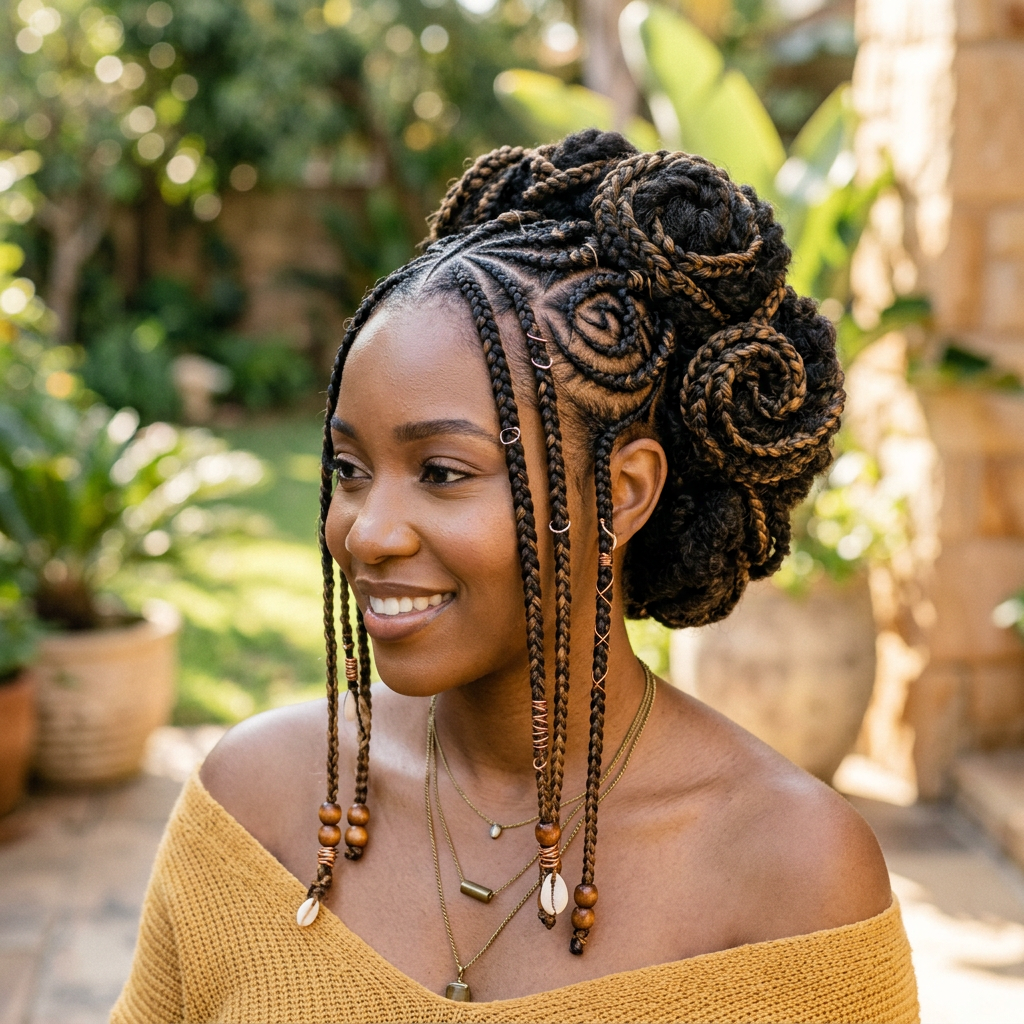
Charlotte Mensah’s rise from a young girl braiding her sister’s hair to one of the world’s most influential hairstylists is a story of resilience, creativity, and cultural pride. Her journey proves that hairdressing, especially within the Afro hair industry, is not only a deeply human craft but also a future‑proof profession that AI can never replace.
Charlotte Mensah’s story begins in Hampstead, London, and also in Accra, Ghana, where she spent her early childhood. After losing her mother at just 13, she turned to styling her younger sister’s hair as a form of healing and expression. A school counsellor recognised her natural talent and encouraged her to pursue hairdressing professionally. By age 16, she was working at Splinters (on of Britain’s prominent Black hair salons and later trained at the London College of Fashion.
Her early experiences, braiding under the Ghanaian sun, learning from community elders, and later navigating London’s beauty landscape, shaped her philosophy: Afro hair is heritage, identity, and art.
Inspiration Rooted in Culture
Mensah’s inspiration comes from the women she grew up around, women who braided, twisted, and nurtured hair as a communal ritual. This cultural grounding, combined with her personal journey through grief and self‑discovery, fuels her mission to elevate Afro hair to the luxury and respect it deserves.
She has become a global authority on natural Afro and curly textures, writing extensively on the subject and championing the natural hair movement long before it became mainstream.
A Celebrity Favourite
Charlotte’s client list reads like a who’s who of culture‑shaping icons. She has styled:
- Janelle Monáe
- Erykah Badu
- Eve
- Jada Pinkett Smith
- Chimamanda Ngozi Adichie
- Zadie Smith
Her salon, Hair Lounge on Portobello Road, has become a destination for artists, editors, and global tastemakers seeking her signature.
Hairdressing as a Career Choice
Hairdressing is a great career choice in this day and age, and is one of the few careers that remains deeply human in this AI age as AI can simulate styles, but it cannot:
- Feel the texture of hair
- Understand cultural nuance
- Build trust and emotional connection
- Create a personalised sensory experience
- Adapt to the uniqueness of every head, curl pattern, and personality
Hairdressing is touch‑based, creative, intuitive, and relational, qualities that machines cannot replicate.
The Earning Power of a Skilled Hairdresser
Hairdressing can also be lucrative. Top-tier hairstylists like Charlotte Mensah demonstrate the financial potential of the craft. While earnings vary, successful hairdressers can make:
- £40,000–£70,000 annually in established London salons
- £100,000+ for those who build a strong brand, specialise in textured hair, or work with celebrities
- Even more through product lines, education, and global collaborations, just as Mensah has done with her award‑winning Manketti Oil range.
Hairdressing is not just a job, it’s a scalable business.
AfroGlobal: A Legacy of Excellence
Charlotte Mensah’s work aligns with the mission o AfroGlobal, celebrating Afro excellence, elevating Black beauty standards, and empowering the next generation of creatives. Her academy in Ghana and her philanthropic work through L.O.V.E. (Ladies of Visionary Empowerment) echo AfroGlobal’s commitment to cultural pride and global impact.
Charlotte Mensah is more than a hairstylist, she is a cultural force, an educator, an entrepreneur, and a pioneer. Her story reminds us that hair is history, identity, and power, and that the hands that shape it will always matter.
By Fiona Lewis