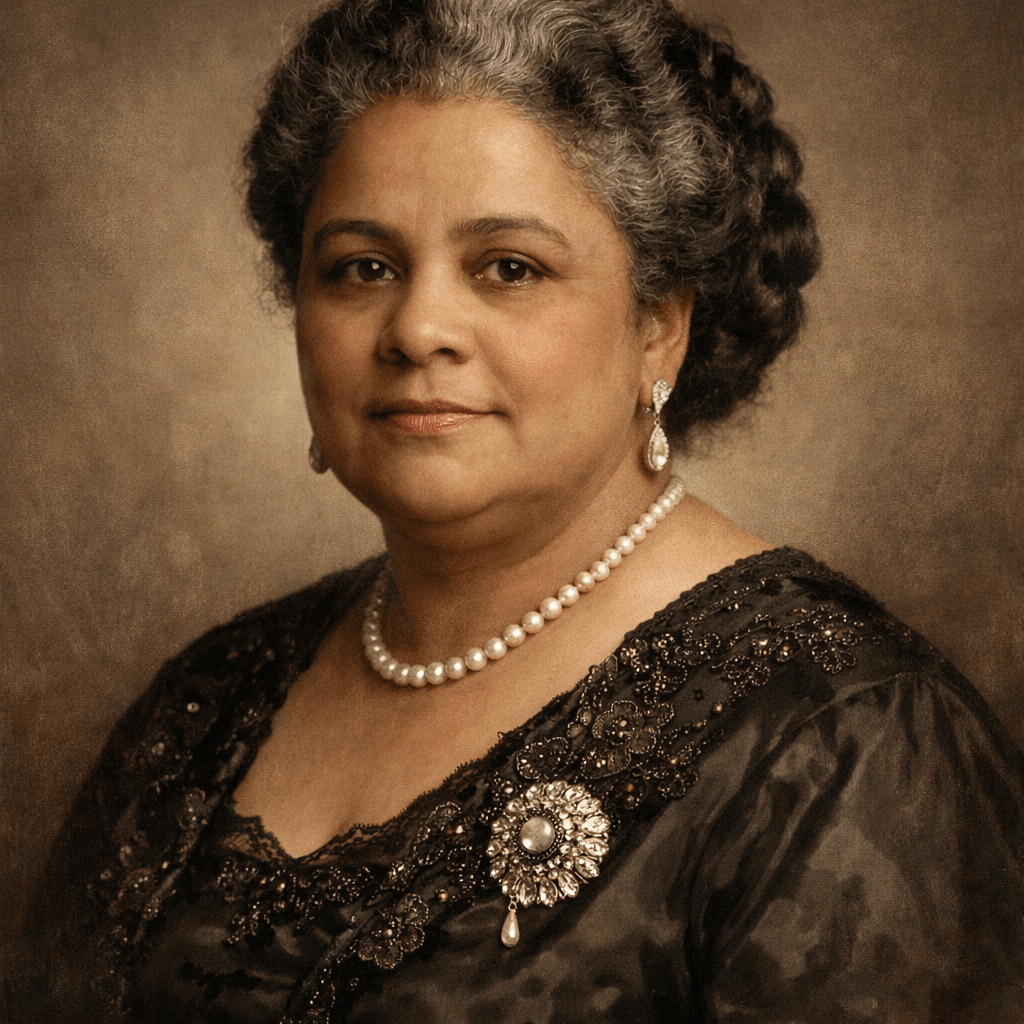
Maggie Lena Walker did not simply make history; she rewrote the rules of what was possible for Afroglobal women in finance, leadership, and community empowerment. At a time when both racism and sexism were designed to silence her, she rose with vision, courage, and strategy — becoming the first Black woman in the United States to charter and serve as president of a bank.
Her achievement was not symbolic. It was revolutionary.
She proved that economic power is community power, and that Afroglobal women can lead institutions, build wealth, and transform futures.
This is the story of how she turned pennies into possibility.
A Childhood Shaped by Resilience and Purpose
Born in 1864 in Richmond, Virginia, just after the end of slavery, Maggie Walker grew up in a world where opportunities for African Americans — especially women — were severely limited. Her mother worked as a laundress, and young Maggie often helped deliver clothes to support the family.
But even in hardship, she saw something powerful:
community, cooperation, and the strength of collective uplift.
She joined the Independent Order of St. Luke as a teenager — a mutual aid society dedicated to supporting Black families — and quickly became one of its most dynamic leaders.
A Vision for Economic Freedom
As she rose through the ranks of the Order, Maggie Walker recognised a truth that many leaders still echo today:
“The greatest weapon against poverty is financial empowerment.”
She saw that Black communities were excluded from mainstream banks, denied fair loans, and blocked from building generational wealth. She also saw that women were rarely trusted with financial leadership.
So she decided to change that.
Founding the St. Luke Penny Savings Ban
In 1903, Maggie Lena Walker made history.
She founded the St. Luke Penny Savings Bank, becoming the first Afroglobal woman — and the first Black woman in America — to serve as a bank president.
Why a “penny” bank?
Because she believed that:
- small savings create big futures
- children should learn financial discipline
- families should have safe places to save
- communities should control their own money
Her bank encouraged people to save even the smallest amounts, knowing that pennies become pounds, and pounds become power.
A Bank Built for Community Transformation
The St. Luke Penny Savings Bank was more than a financial institution — it was a movement for liberation.
It helped Afroglobal families:
- buy homes
- start businesses
- save for education
- build generational wealth
It also created employment opportunities for Black women, giving them roles in banking, accounting, and administration at a time when such positions were nearly impossible to access.
Maggie Walker didn’t just open a bank.
She opened doors.
Leadership That Inspired a Generation
Maggie Walker’s leadership style was bold, strategic, and deeply community‑focused. She believed in:
- economic self‑reliance
- collective progress
- women’s empowerment
- financial education
- community ownership
Her bank survived the Great Depression — a feat many larger banks could not achieve — and later became part of Consolidated Bank and Trust, one of the oldest Black‑owned banks in the United States.
Her legacy continues to influence:
- Afroglobal entrepreneurs
- Black‑owned banks
- community savings groups
- financial literacy programmes
- women in leadership
She proved that representation in finance is not just symbolic — it is transformative.
A Blueprint for Afroglobal Women Today
Maggie Walker’s story resonates across the Afroglobal world because it speaks to:
- African women building fintech companies
- Caribbean women leading community credit unions
- Black British women breaking barriers in corporate finance
- Afroglobal girls dreaming of entrepreneurship and leadership
She showed that economic empowerment is a form of liberation, and that Afroglobal women have always been capable of leading powerful institutions.
A Legacy of Power, Purpose, and Possibility
Maggie Lena Walker’s life is a testament to what happens when courage meets vision.
She became the first Afroglobal woman to lead a bank, not because the world made space for her — but because she created space for herself and her community.
She turned pennies into power.
She turned obstacles into opportunities.
She turned leadership into legacy.
And today, her story continues to inspire Afroglobal people everywhere to save, build, invest, and rise — one penny at a time.
By Vivian Prempeh