The roots of Black banking trace back to the post‑Civil War era, when newly freed African Americans needed safe places to save money and access credit. Although the U.S. government created the Freedman’s Savings and Trust Company in 1865, it collapsed in 1874 due to corruption and mismanagement, wiping out the savings of thousands of Black depositors.
In response, Black communities began building their own financial institutions. Capital Savings Bank (Washington, D.C., 1888) became the first Black‑owned bank in the U.S and the Savings Bank of the Grand Fountain of the United Order of True Reformers (Richmond, 1889) became the first chartered Black bank.
By the early 20th century, more than 60 Black‑owned banks operated across the South, often supported by Black churches, mutual aid societies, and fraternal organizations that pooled community resources to build economic independence.
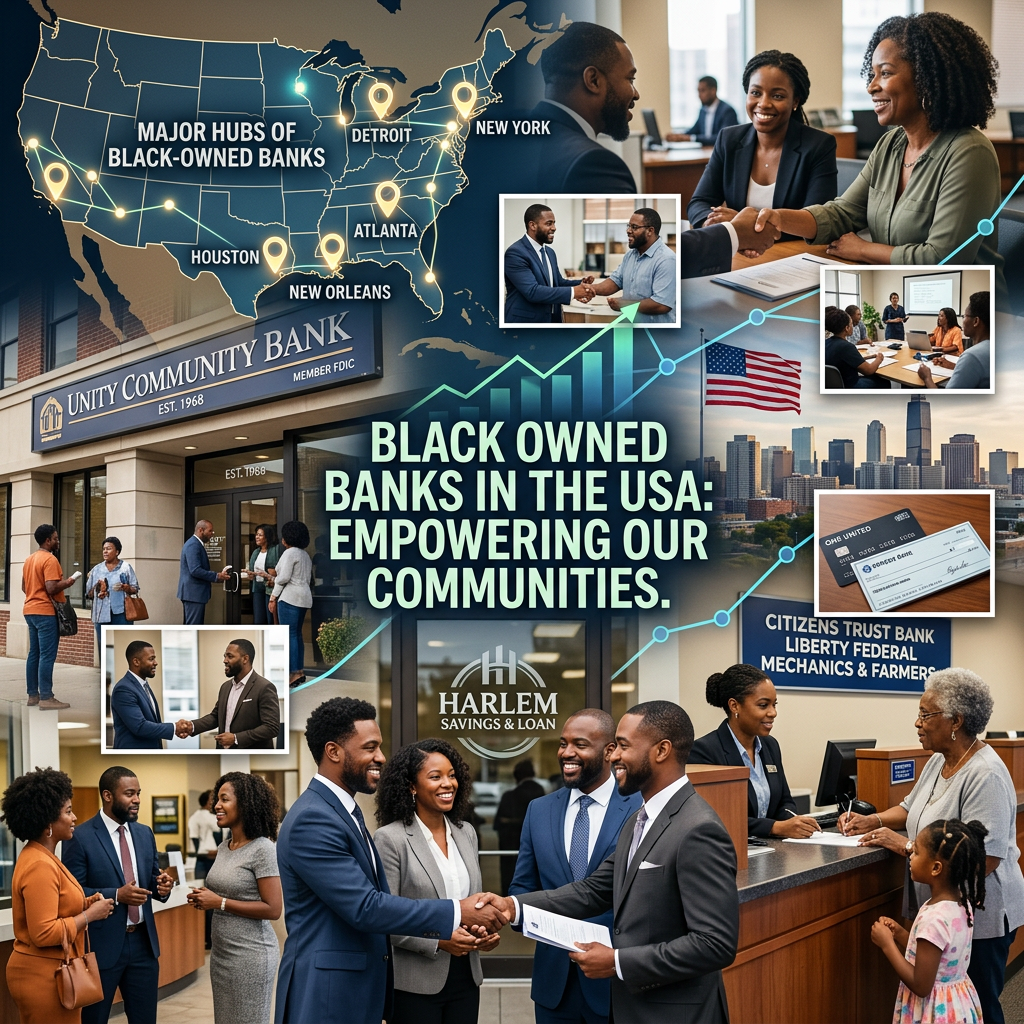
The number of Black‑owned banks peaked around the 1970s with more than 50 institutions, but economic crises—including the 1980s savings‑and‑loan collapse and the 2008 recession—reduced their numbers by nearly half. As of recent counts, only about 18 Black‑owned banks remain, though their role is more important than ever.
Key Leaders Who Shaped Black Finance
Several trailblazers transformed Black banking and finance:
- Maggie Lena Walker — First Black woman to found and serve as president of a U.S. bank (St. Luke Penny Savings Bank, 1903). She created financial pathways when white‑owned banks refused Black deposits.
- Blanche Kelso Bruce — First African American to appear on U.S. currency as Register of the Treasury (1879) and a major advocate for Black economic empowerment.
- Alonzo Herndon — Founder of Atlanta Life Insurance Company and Atlanta’s first Black millionaire, whose company became one of the largest Black financial institutions in the U.S.
- O.W. Gurley — Visionary behind Tulsa’s Greenwood District (“Black Wall Street”), where Black businesses and financial institutions thrived before the 1921 massacre.
- Robert E. James II — Modern leader and chairman of the National Bankers Association, advocating for Black banks as “financial anchors” for underserved communities.
Why Black‑Owned Banks Matter
Black‑owned banks were—and remain—critical because mainstream banks historically denied Black Americans fair access to credit, mortgages, and business loans. Even today:
- 49% of Black households are underbanked or unbanked, compared to 15% of white households.
- Black families are twice as likely to be denied credit as white applicants.
Black‑owned banks counter these disparities by offering:
- Fair, non‑predatory lending in communities historically targeted by redlining
- Relationship‑based banking, which looks beyond credit scores to understand real financial circumstances
- Financial literacy programs and community reinvestment
- Support for Black‑owned businesses, nonprofits, and homeowners
These institutions help close the racial wealth gap by keeping capital circulating within Black communities.
Impact on the AfroGlobal Community
Although based in the U.S., Black‑owned banks influence the broader African diaspora in several ways:
Economic Empowerment Models
Their history of self‑reliance provides a blueprint for AfroGlobal communities seeking financial independence and cooperative economics.
Diaspora Investment Pathways
Many Black‑owned banks support programs that encourage investment in African and Caribbean ventures, strengthening global economic ties.
Cultural and Financial Solidarity
They symbolize resilience and collective power—values shared across the diaspora.
Global Advocacy for Financial Equity
Black banking leaders often collaborate with international organizations to address global racial wealth disparities.
Black‑owned banks are more than financial institutions—they are engines of empowerment, resilience, and community wealth‑building. Their legacy continues to inspire AfroGlobal communities to build financial systems rooted in equity, self‑determination, and shared prosperity.
By George Tetteh