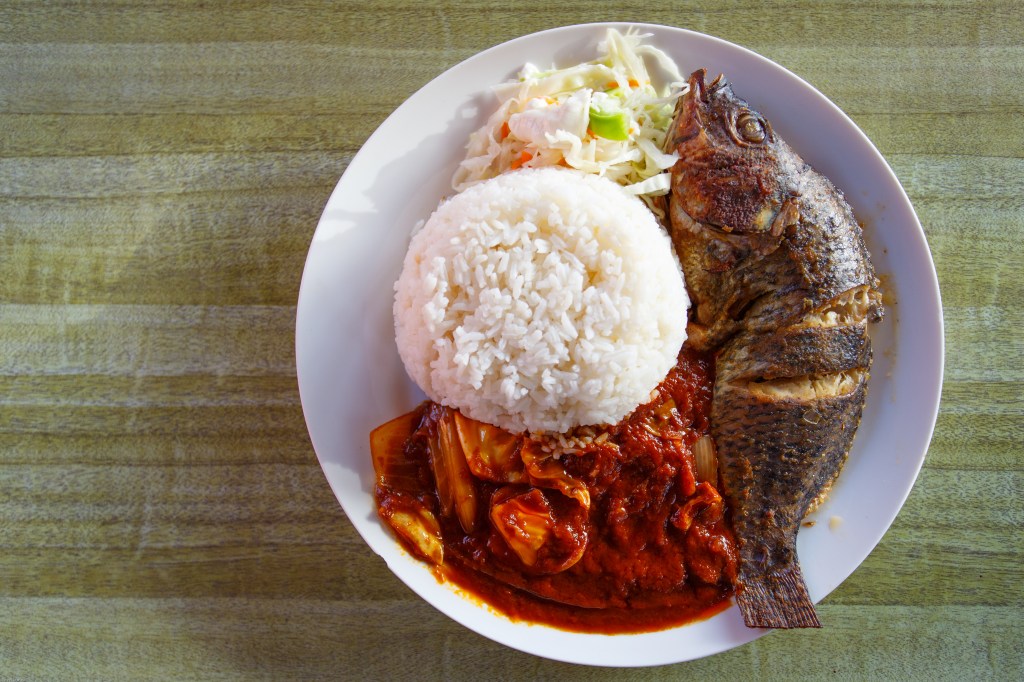
Tilapia isn’t just a fish.
For many African and Afro‑diaspora families, it’s a symbol of home, memory, migration, and shared meals. Whether grilled in Accra, fried in Lagos, steamed in Nairobi, or served with plantain in London or Atlanta, tilapia has become one of the most recognisable foods across the Afroglobal world.
But why tilapia?
Why did this particular fish become so deeply woven into our food culture — and is it actually good for us?
Let’s break it down.
1. A Fish With Ancient African Roots
Tilapia is not new to African cuisine, it’s ancient.
- The Nile River was one of the earliest homes of tilapia.
- Ancient Egyptians even painted tilapia on tomb walls as a symbol of rebirth and life.
- Across West, East, and Central Africa, tilapia thrived naturally in lakes, rivers, and lagoons.
Because it was abundant, easy to catch, and mild in flavour, it became a staple protein for many communities long before modern farming existed.
So when Africans migrated — voluntarily or through displacement — tilapia travelled with us as a memory of home.
2. Why Tilapia Became Popular in Afroglobal Communities
Familiar Taste, Familiar Cooking Methods
Tilapia works beautifully with African cooking styles:
- Grilled over charcoal
- Fried with pepper and spices
- Stewed with tomatoes and onions
- Served with banku, ugali, fufu, rice, yam, or plantain
Its mild flavour absorbs seasoning well, making it perfect for bold African spices.
Affordable & Accessible
As Africans moved across the world, tilapia became one of the few fish that:
- Was widely available
- Was relatively affordable
- Cooked quickly
- Matched the taste of fish back home
This made it a natural choice for families rebuilding their food traditions abroad.
Farming Made It Global
Tilapia is one of the easiest fish to farm.
Countries across Africa, Asia, and Latin America began producing it at scale, making it:
- Cheaper than salmon or snapper
- Available year‑round
- Easy to export
This global farming boom helped tilapia become a diaspora staple.
3. Is Tilapia Good for Us? The Health Conversation
There’s been debate about tilapia, especially farmed tilapia, but here’s the balanced truth.
The Good
Tilapia is:
- High in protein
- Low in fat
- A good source of vitamins B12, niacin, and selenium
- Easy to digest for children and elders
- Lower in mercury than many other fish
For families looking for healthy, affordable protein, tilapia is a strong option.
The Concerns
Not all tilapia is equal.
- Wild tilapia is generally very healthy.
- Responsibly farmed tilapia is also safe and nutritious.
- Poorly farmed tilapia (in overcrowded or unregulated environments) may have lower nutritional value.
This is why many Afroglobal families prefer:
- Fresh tilapia from African or Caribbean markets
- Whole fish rather than fillets
- Trusted local suppliers
Tilapia is healthy when sourced responsibly.
It’s not “bad fish” — it’s simply a fish that depends on farming quality.
Tilapia as Cultural Identity
For many Afroglobal families, tilapia is more than nutrition — it’s nostalgia.
It reminds us of:
- Sunday meals with family
- Street food by the beach
- Market days
- Village gatherings
- Festivals and celebrations
Food is memory.
Tilapia carries the taste of home across oceans.
Tilapia in the Future of African Food Culture
Tilapia farming is growing across Africa — especially in:
- Ghana
- Nigeria
- Kenya
- Uganda
- Rwanda
- Egypt
This means:
- More local jobs
- More affordable protein
- Less reliance on imported fish
- Stronger food security
Tilapia isn’t just part of our past — it’s part of our future.
Tilapia is popular in Afroglobal communities because it is:
- Ours historically
- Ours culturally
- Ours economically
- Ours nutritionally
- It’s a fish that travelled with us, fed us, and continues to connect us to our roots — no matter where in the world we live.
By Fiona Lewis