Across the world, governments invest billions in job creation programmes, entrepreneurship initiatives, and economic development schemes. Yet one of the most remarkable business development systems emerged organically from a people whose greatest resource was not abundant capital or state support, but a commitment to community, enterprise, and human development.
This is the story of the Igbo business model.
Originating among the Igbo people of southeastern Nigeria, the model has attracted global attention because of its ability to create entrepreneurs, generate wealth, distribute opportunity, and foster economic resilience across generations. What makes it extraordinary is that it is not primarily a financial system, it is a human capacity development system.
The Apprenticeship System
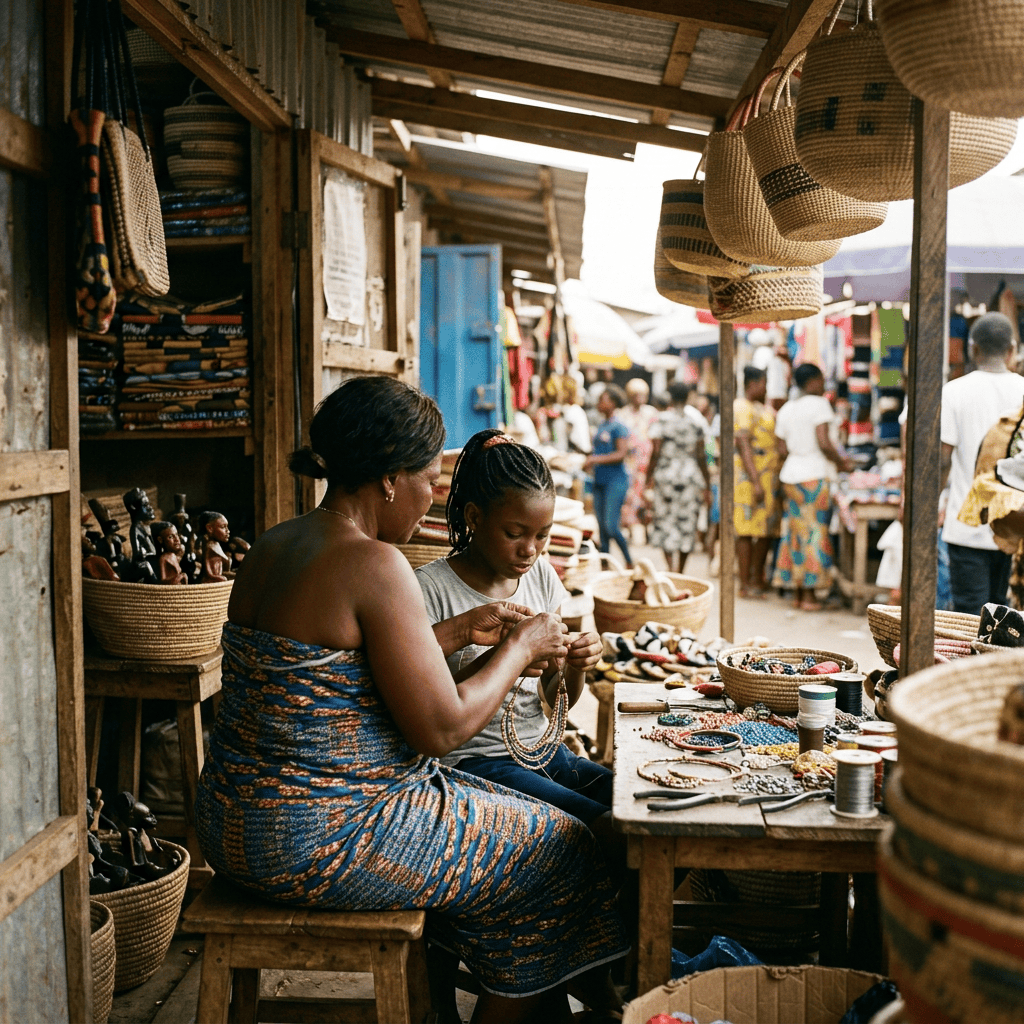
At the heart of the Igbo business model is the concept often referred to as the Igba Boi apprenticeship system. Traditionally, a young person enters the business of an established entrepreneur, often learning not only technical skills but also sales, negotiation, customer relations, supply chain management, risk management, and business ethics.
The apprentice works closely with the business owner for several years.
This is not simply employment, it is practical entrepreneurship education, as the apprentice learns by participating.
By the end of the apprenticeship, the mentor often helps the apprentice establish an independent business, providing capital, inventory, equipment, or financial support to help them start their entrepreneurial journey, which creates a powerful cycle:
Entrepreneurs create entrepreneurs and those entrepreneurs create new entrepreneurs and the process repeats.
Human Capital Before Financial Capital
Many economic models focus on access to money, the Igbo model focuses first on access to knowledge. This distinction is profound as a loan can be lost, investment capital can be spent but knowledge, relationships, confidence, and experience remain valuable long after the money is gone.
The system recognises that wealth creation begins with human capability and the apprentice leaves not only with resources but with:
Business knowledge
Industry experience
Commercial networks
Market understanding
Confidence
Entrepreneurial identity
In many ways, this is a practical example of human capacity development in action.
Why It Works
The success of the system rests upon several interconnected principles.
1. Economic Inclusion
The apprenticeship model allows individuals from modest backgrounds to enter business without significant financial resources. Someone may begin with little capital but gain access to practical learning opportunities unavailable through traditional education alone. The system democratizes entrepreneurship.
2. Knowledge Transfer
Many businesses fail because people possess capital but lack experience.
The Igbo model addresses this challenge by ensuring knowledge is transferred before independence. Apprentices witness both success and failure in real-world environments and they learn practical lessons that cannot easily be taught in classrooms.
3. Trust-Based Networks
Trust is a valuable economic asset, as the system relies heavily on relationships, reputation, and mutual accountability. The mentor’s reputation becomes linked to the apprentice’s success, which creates incentives for quality training and ongoing support.
4. Wealth Multiplication
Many economic systems concentrate wealth, the apprenticeship system distributes opportunity so rather than creating one successful entrepreneur, the model creates many in order for economic growth to spread through families, communities, and entire regions.
A Different Understanding of Success
In many parts of the world, success is measured by how much wealth an individual accumulates, the Igbo model introduces another measure:
How many people have you helped become successful?
A respected entrepreneur is not merely someone who owns businesses, they are often someone who has launched businesses through others, which creates a culture where mentorship becomes part of legacy and success becomes communal rather than exclusively individual.
Lessons for the Modern World
The modern economy is increasingly shaped by automation, artificial intelligence, and rapid technological change. As a result, governments, institutions, and organisations are searching for sustainable methods of developing talent, in which the Igbo business model offers several lessons:
Invest in people before profits.
Prioritise capability development.
Build mentorship structures.
Create pathways to ownership.
Share opportunity rather than simply distribute wages.
View entrepreneurship as a skill that can be developed.
These principles remain relevant whether one operates in manufacturing, technology, education, consulting, or the creative industries.
The Afroglobal Significance
The Afroglobal narrative helps us recognise that African innovation is not limited to technology, natural resources, or politics, as Africa has also produced sophisticated social and economic systems.
The Igbo business model demonstrates that communities can create sustainable wealth-generating structures based on trust, mentorship, and human development.
As Africans continue to contribute globally, there is increasing opportunity to share indigenous systems of knowledge and enterprise with the wider world, making the significance of the Igbo model extend beyond Nigeria, as its core principles can be applied anywhere.
In London
In Toronto
In Accra
In Johannesburg
In Atlanta
In Lagos and anywhere people seek to build both prosperity and people.
The Future of Entrepreneurship
Perhaps the greatest lesson of the Igbo business model is that wealth is not created by money alone, it is created when people invest in people, knowledge is shared, opportunities are multiplied, and when success becomes a collective endeavour.
The system reminds us that the most valuable form of capital is not financial capital, it is human capital and when communities commit themselves to developing human potential, the returns can echo across generations, which may be the true genius of the Igbo business model; that it does not merely produce businesses, it produces business builders.
By George Tetteh