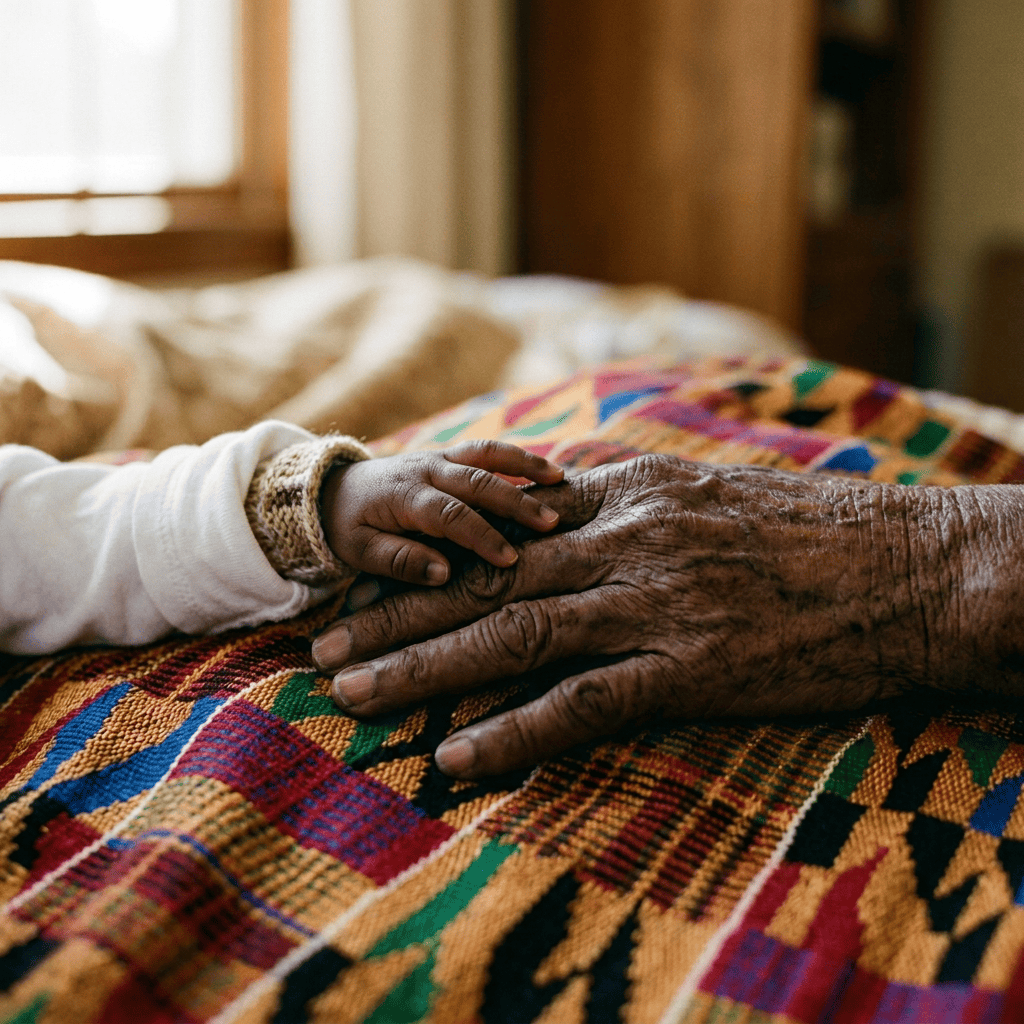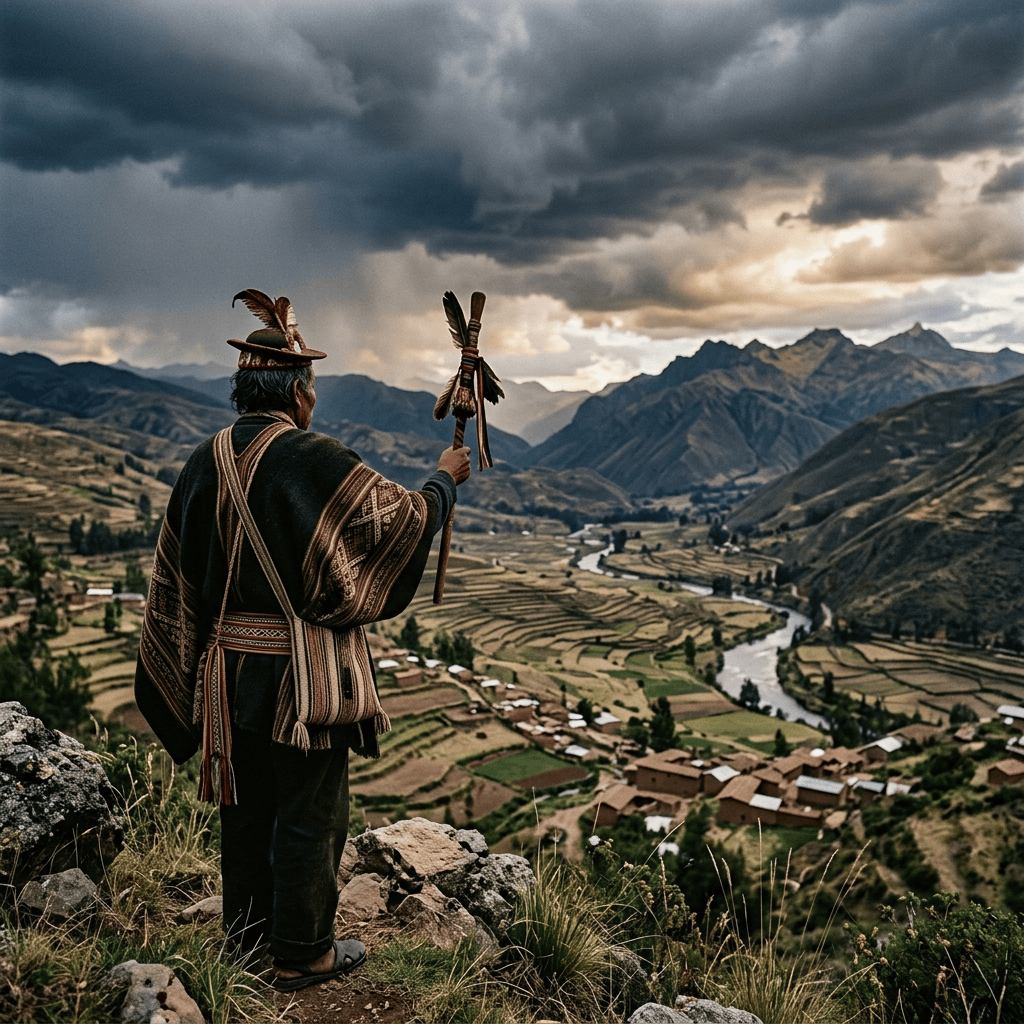
Across many African cultures, the figure of the rainmaker occupies a unique place within history, spirituality, and community life. To some, the rainmaker is remembered as a person believed to possess the wisdom, rituals, or spiritual insight necessary to call forth rain during times of drought. To others, the rainmaker represents something much deeper than weather.
The rainmaker embodies one of Africa’s most profound philosophical ideas:
Everything is connected.
The people are connected to the land.
The land is connected to the sky.
The sky is connected to the seasons.
The seasons are connected to the harvest.
And the harvest is connected to the wellbeing of the community.
In this worldview, rain is not merely a meteorological event, it is part of a living relationship between humanity, nature, and the forces that sustain life.
A Different Way of Seeing the World
Modern society often teaches us to see ourselves as separate from our surroundings.
We speak of “the environment” as if it exists outside of us.
We talk about nature as something we visit on weekends or preserve in designated areas.
Many traditional African perspectives invite us to see things differently.
The rainmaker tradition reminds us that human beings are not observers of nature.
We are participants within it.
When rain failed to come, communities did not simply ask, “What is happening to the weather?”
They often asked:
“What is happening in our relationship with the world around us?”
This way of thinking recognised that life depends on balance. Balance between people and nature, balance between taking and giving, balance between individual desires and collective well-being.
The Rainmaker as a Symbol of Responsibility
Perhaps the most misunderstood aspect of the rainmaker is the belief that the role was solely about influencing rainfall. In many ways, the rainmaker symbolised responsibility rather than power.
The rainmaker was often seen as someone who understood interconnectedness. Someone who recognised that the well-being of the community depended on maintaining harmony.
Whether through spiritual leadership, environmental knowledge, ancestral wisdom, or communal guidance, the rainmaker served as a reminder that no one exists in isolation.
If the crops failed, everyone suffered.
If the rivers dried, everyone was affected.
If the community prospered, the benefits reached many.
The rainmaker reflected an understanding that individual survival and collective survival were inseparable.
The Lesson
Today, the Afroglobal experience is revealing that this ancient idea remains remarkably relevant, as Africans now live across every continent and families span nations and cultures.
amilies span nations and cultures.
A child may have roots in Ghana, be born in London, study in Canada, work in Dubai, and marry someone whose heritage includes India, Jamaica or Brazil.
We are witnessing the emergence of an increasingly interconnected world. Ironically, modern technology is confirming what many traditional African philosophies understood centuries ago:
Human beings are deeply connected to one another.
A decision made in one country can affect millions elsewhere.
An innovation developed in one city can transform lives globally.
Environmental changes in one region can influence weather patterns, migration, food security, and economic stability across continents.
The world is not a collection of isolated islands, it is a network of relationships.
From Rainmakers to Changemakers
Perhaps the rainmaker’s greatest legacy is not about rain at all, perhaps it is about influence.
In every generation, there are individuals who help bring life where there is drought.
There are people who bring hope where there is despair.
Wisdom where there is confusion.
Unity where there is division.
Opportunity where there is limitation.
These modern rainmakers may be teachers, parents, entrepreneurs, community leaders, artists, innovators, or mentors.
Like the traditional rainmaker, they understand that their actions ripple outward into the lives of others.
They recognise that success is not simply personal, it is relational.
Humanity’s Forgotten Connection
Many of today’s challenges stem from forgetting a simple truth.
We belong to one another.
When communities suffer isolation, everyone loses.
When the environment is damaged, everyone is affected.
When inequality widens, society becomes less stable.
When people flourish, entire communities benefit.
The Afroglobal narrative invites us to recover this understanding as it reminds us that identity is not solely individual, it is collective.
That prosperity is not merely personal, it is shared, and that human beings thrive when they recognise their connection to each other and to the natural world.
The Rainmaker Within Us
The rainmaker is ultimately more than a cultural figure, it is a philosophy of life, a reminder that every action carries consequences beyond ourselves, community matters and that we are not separate from nature but part of it. Perhaps most importantly, it is a reminder that every person has the capacity to bring life, growth, and renewal into the world around them and in an age often characterised by division and disconnection, the ancient African concept of the rainmaker offers a timeless lesson:
We are connected to our ancestors, our communities, the earth and to one another and like the rainmaker, each of us has the opportunity to become a source of nourishment, healing, and growth for generations to come because when we understand our interconnectedness, we begin to recognise a profound truth:
The wellbeing of one is ultimately tied to the wellbeing of all.
By Emma Harding