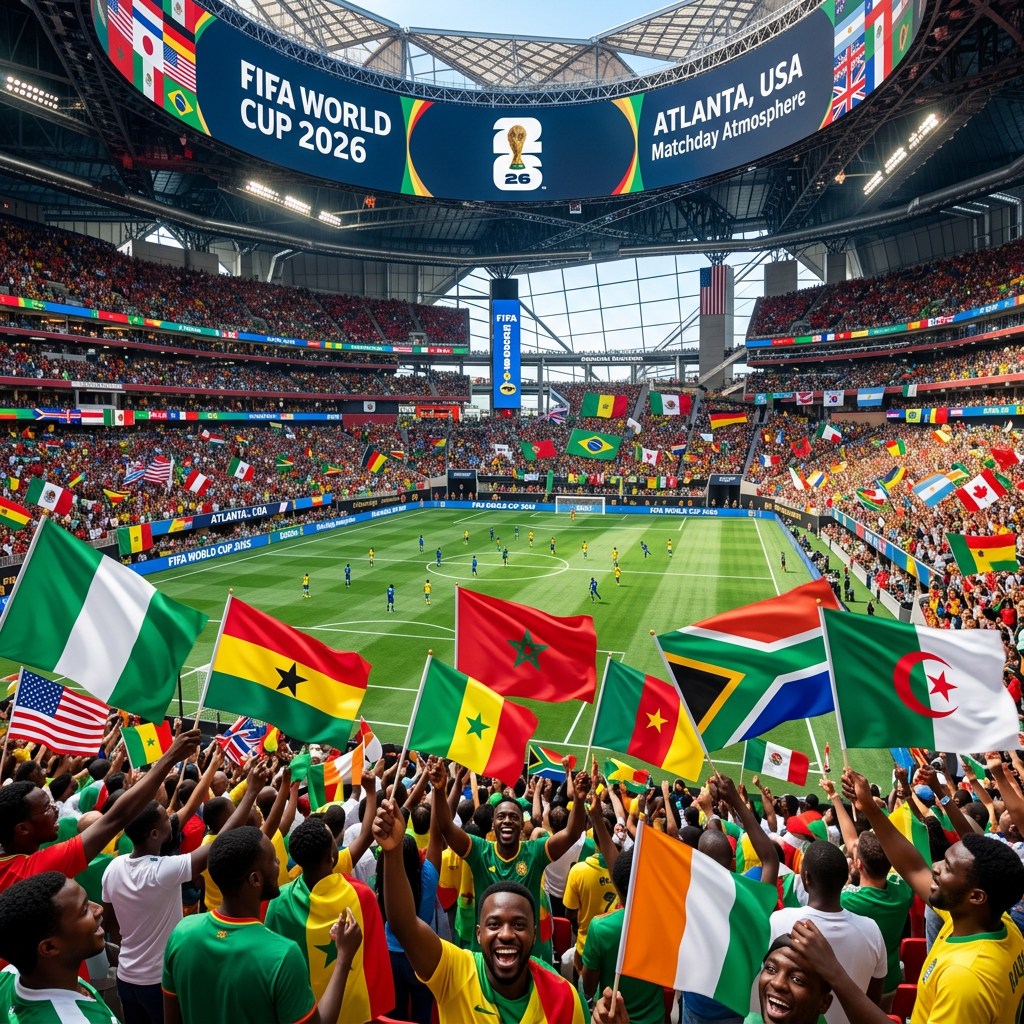
The FIFA World Cup began in 1930, hosted by Uruguay, and has since grown into the world’s largest sporting event. Over the decades, it has expanded from 13 teams to 48 teams in the 2026 edition, the biggest expansion in tournament history.
Football’s simplicity of a ball, a pitch, and passion, has made it a universal sport. The World Cup has repeatedly shown its power to unite people across cultures, languages, and borders. Fans celebrate together, cry together, and share moments that transcend nationality. This shared emotional experience is why football is often called the beautiful game.
The 2026 World Cup: Host Nations & Dates
The 2026 FIFA World Cup will be jointly hosted by Canada, Mexico, and the United States, marking the first time the tournament is hosted by three nations.
- Tournament dates: June 11 – July 19, 2026
- Final venue: New York/New Jersey (MetLife Stadium)
- Opening match: Mexico City, June 11
Afroglobal Teams Competing in the 2026 World Cup
The African continent (CAF) and Afro‑diaspora nations have a strong presence this year. According to FIFA’s qualified team list, the following Afroglobal teams will compete:
CAF (Africa) Nations
- Algeria
- Cabo Verde (Cape Verde)
- Congo DR
- Côte d’Ivoire (Ivory Coast)
- Egypt
- Ghana
- Morocco
- Senegal
- South Africa
- Tunisia
Afro‑diaspora Nations (Concacaf & others)
- Curaçao
- Haiti
- Panama (Afro‑Panamanian heritage is significant)
Key 2026 Fixtures Featuring Afroglobal Teams
Below are some major group‑stage matches involving Afroglobal teams (all sourced from official schedules):
- Mexico vs South Africa — June 11, Mexico City
- Brazil vs Morocco — June 13, East Rutherford, New Jersey
- Germany vs Ivory Coast — June 20, Toronto
- France vs Senegal — June 16, East Rutherford, New Jersey
- Argentina vs Algeria — June 16, Kansas City
- Belgium vs Egypt — June 15, Seattle
- Spain vs Cape Verde — June 15, Atlanta
These matches highlight the global spread of Afroglobal football talent across North America’s 16 host cities.
Afroglobal Teams With the Best Chance of Success in 2026
While all African and Afro‑diaspora teams bring passion and talent, a few countries stand out based on recent performance and squad strength:
Morocco
Morocco made history in 2022 by becoming the first African team to reach a World Cup semi‑final. Their strong defensive structure and European‑based talent pool make them one of the top Afroglobal contenders again.
Senegal
Senegal, the 2021 AFCON champions, remain one of Africa’s most consistent teams. Their match against France will be a major test.
Ivory Coast
A rising force with a new generation of talent, Ivory Coast faces Germany early, a match that could define their tournament.
Algeria
Returning with a strong squad, Algeria’s opening match against Argentina is challenging but could set the tone.
But the most likely Afroglobal contender would be
Morocco, based on their historic 2022 run and strong squad continuity.
Afroglobal Teams That Have Gone Far in Previous World Cups
African teams have a proud history of breaking barriers:
- Cameroon (1990) was the First African team to reach the quarter‑finals.
- Senegal (2002), quarter-finalists in their debut tournament.
- Ghana (2010), narrowly missed the semi‑final after a dramatic match against Uruguay.
- Morocco (2022) was the First African semi‑finalists in history.
These achievements have inspired generations and elevated African football on the world stage.
Why Football Brings People Together
Football’s global appeal lies in its accessibility and emotional power. The World Cup amplifies this by:
- Creating shared global moments
- Encouraging cultural exchange among fans
- Showcasing national pride without hostility
- Bringing diaspora communities together
- Offering underdog nations a chance to shine
The Afroglobal teams, in particular, embody resilience, unity, and cultural pride, qualities that resonate with fans worldwide.
The 2026 World Cup promises to be one of the most exciting editions ever. With expanded teams, historic host nations, and strong Afroglobal representation, the tournament will celebrate football’s power to unite the world.
By Michael Frazer