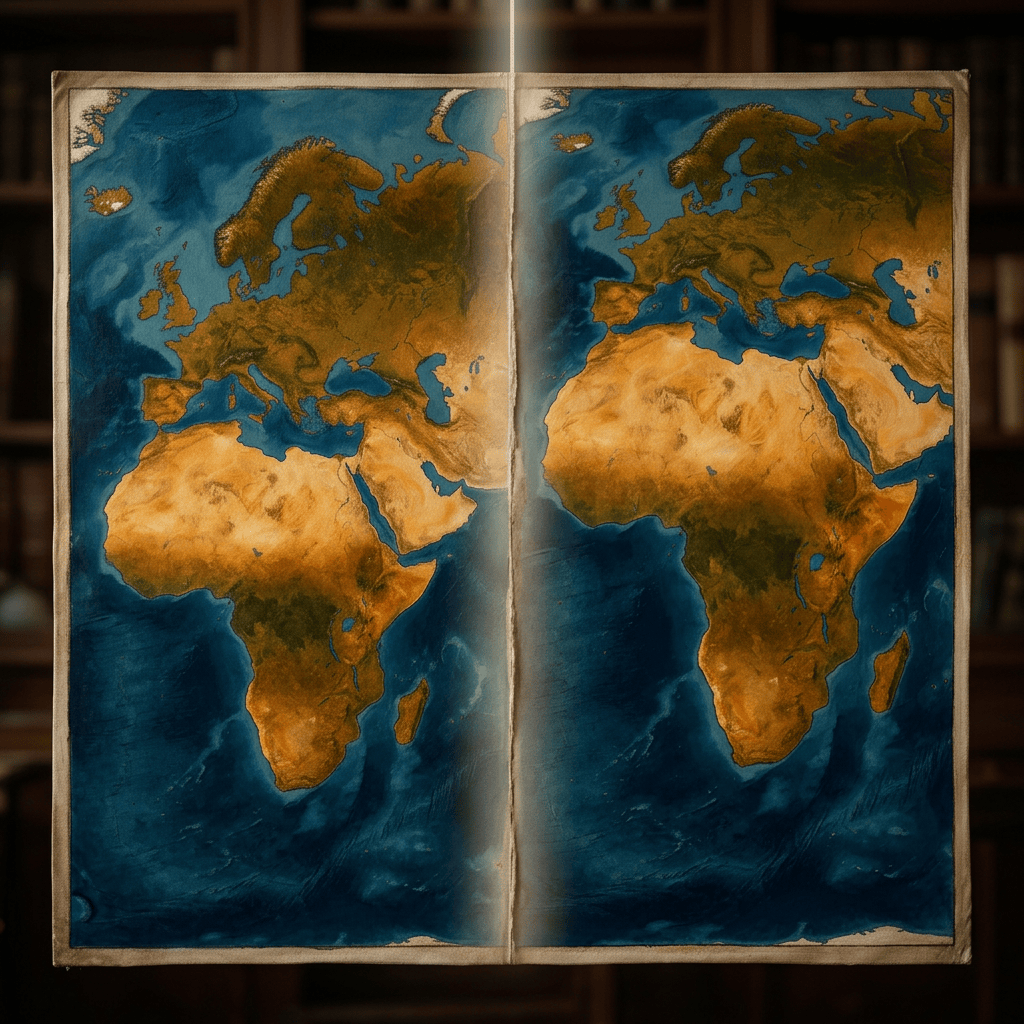
For many across the Afroglobal world, the name Africa carries deep pride, but the name Alkebulan carries something even older, even more profound. Long before the continent was called Africa, several African civilizations are said to have used the name Alkebulan, a word often translated as “Mother of Mankind” or “Garden of Eden.”
Whether interpreted spiritually, culturally, or historically, the name Alkebulan reminds us of something powerful: Africa is the birthplace of humanity, the root of civilisation, and the home of some of the world’s oldest cultures and innovations. This meaning aligns with archaeological evidence placing early human origins in East Africa.
What Does “Alkebulan” Mean?
Across Afrocentric scholarship, Alkebulan is widely described as meaning “Mother of Mankind” and/or “Garden of Eden”.
These meanings reflect Africa’s identity as:
- the cradle of humanity,
- the spiritual beginning of civilisation, and
- a continent with deep, indigenous cultural roots.
Senegalese historian Dr. Cheikh Anta Diop is one of the most cited scholars linking Alkebulan to ancient African peoples such as the Moors, Nubians, Numidians, Carthaginians, and Ethiopians.
How Did Alkebulan Become “Africa”?
The shift from Alkebulan to Africa is tied to external naming, particularly by the Romans and Greeks. The term Africa is believed to have originated from:
- “Afri” — the name Romans used for people in North Africa
- “Africa terra” — meaning “land of the Afri”
Over time, through colonisation and map‑making, Africa became the dominant global name. Scholars note that this shift reflects how colonial powers replaced indigenous names with their own.
But today, the revival of Alkebulan is not about rejecting the name Africa, it’s about reclaiming identity, restoring pride, and remembering our origins.
Why Alkebulan Matters for the Afroglobal Community Today
The name Alkebulan carries a message that is deeply empowering for our community:
1. It reminds us of our greatness.
Calling Africa “Mother of Mankind” or “Garden of Eden” places African people at the centre of human history, not the margins. It affirms that our story begins with brilliance, not struggle.
2. It reconnects us to indigenous identity.
Alkebulan is celebrated as an indigenous name, not one imposed from outside. Reclaiming it is an act of cultural restoration and self‑determination.
3. It strengthens Pan‑African unity.
The name symbolises shared heritage across the continent and diaspora, a reminder that despite borders, languages, and histories, we are connected by origin.
4. It inspires pride in young people.
For children and teens, learning that Africa was once called Alkebulan, “Mother of Mankind”, builds confidence, belonging, and cultural pride.
5. It challenges colonial narratives.
Revisiting Alkebulan encourages us to question how history has been told and to uplift African voices, scholars, and traditions.
A Name That Carries Power
Whether one views Alkebulan as a historical name, a cultural symbol, or a spiritual identity, its meaning is undeniably powerful. It reminds the Afroglobal community that:
- We come from the world’s oldest civilisations.
- We are the descendants of innovators, builders, and thinkers.
- Our identity is ancient, sacred, and unshakeable.
Reclaiming the name Alkebulan is not about rewriting history, it’s about reclaiming pride, restoring dignity, and celebrating the deep roots of African identity.
By Vivian Prempeh