Imagine a giant library full of stories, wisdom, and solutions to life’s problems.
Now imagine that instead of typing on a laptop, you shake palm nuts or a divination chain and the pattern they make tells you exactly which “page” of the library to open.
That is Ifá, the sacred knowledge system of the Yoruba people of West Africa.
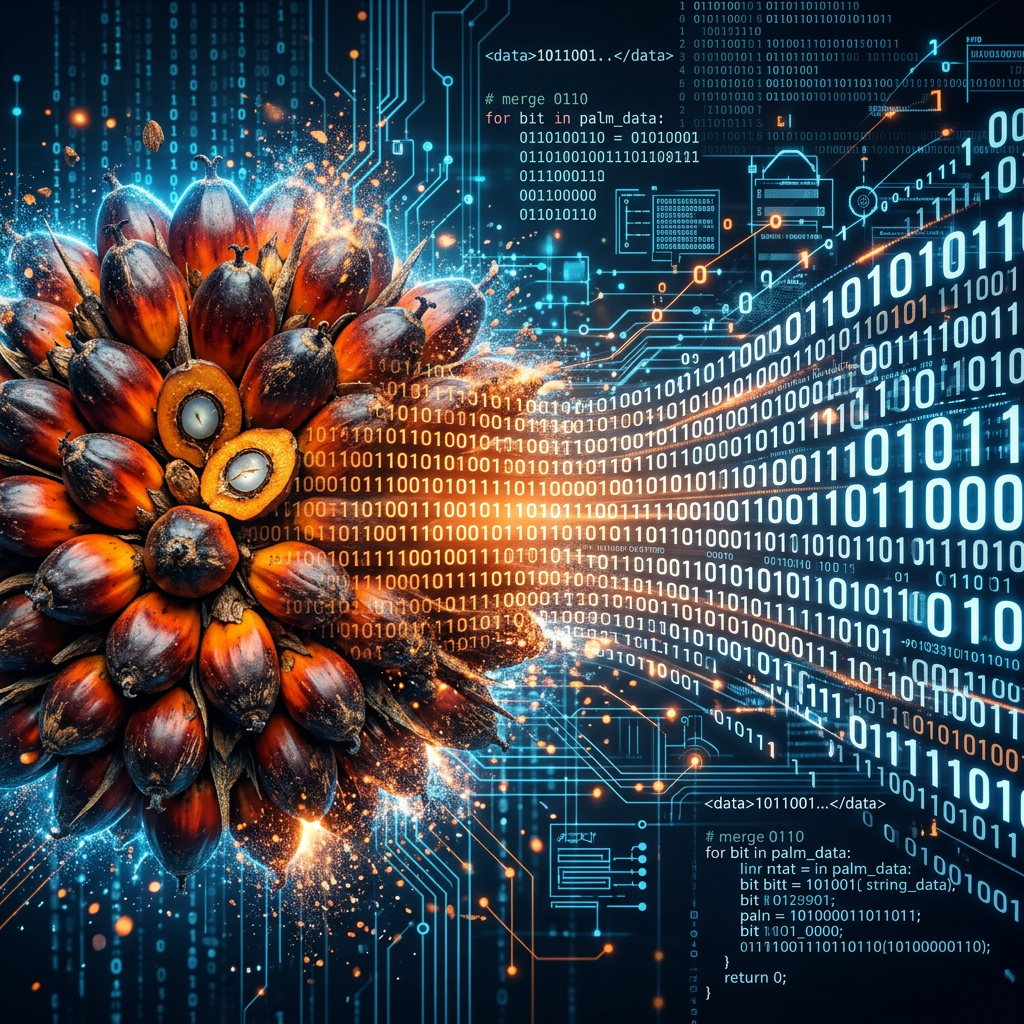
Ifá is thousands of years old, and it works using patterns, bits, and codes, just like computers today.
This is not fantasy. Scholars have shown that Ifá uses binary logic, 8‑bit sequences, and a 256‑pattern database, exactly like modern computing systems ;
The Babaláwo = The Programmer
A babaláwo (priest) is like a programmer.
They know how to “read the code” of the universe.
The Palm Nuts = The Keyboard
When the babaláwo shakes palm nuts or an opele chain, they fall into two possible states:
Open (like the number 1)
Closed (like the number 0)
This is exactly how computers work, everything is made of 1s and 0s.
The Patterns = The Code
Each divination creates 8 bits (eight 1s or 0s).
Those 8 bits form one of 256 possible patterns called Odù Ifá.
Computers also use 8 bits to make 256 combinations.
Ifá did this centuries before Western binary mathematics was written down.
The Odù = The Database
Each of the 256 Odù contains:
Stories
Proverbs
Warnings
Advice
History
Moral lessons
Think of it like a giant African Google search engine.
The pattern tells the babaláwo which “file” to open.
5. The Interpretation = The Output
The babaláwo reads the story linked to the pattern and explains what it means for the person asking the question.
This is just like how an algorithm takes input → processes it → gives output.
How Ifá Is Basically Ancient Coding
Ifá uses binary code
Two states: open/closed = 1/0
Computers use the same two states.
Ifá uses 8‑bit sequences
8 bits → 256 combinations
Computers use 8 bits → 256 combinations.
Ifá uses a huge knowledge database
Over 430,000 verses connected to the 256 Odù
This is like a massive African data library.
Ifá uses algorithms
The babaláwo follows a structured method to interpret results, just like a computer follows rules to solve problems.
Ifá uses probabilistic reasoning
The patterns are random, but the interpretation is structured, similar to how AI models use probability to make predictions.
Why This Matters to the Afroglobal Community
1. It proves Africa has always been innovative
Ifá shows that African people created mathematical, logical, and computational systems long before Europe wrote them down.
This challenges the myth that technology is “Western.”
2. It restores pride in African intellectual heritage
Knowing that Yoruba ancestors built a system similar to modern coding helps Afroglobal youth see themselves as:
Inventors
Thinkers
Technologists
Innovators
3. It connects spirituality with science
Ifá is not “mystical nonsense.”
It is a structured knowledge system with logic and precision.
This helps bridge African spirituality with modern STEM fields.
4. It inspires new African tech
Ifá’s structure can inspire:
African‑centred AI
Afro‑algorithmic design
Indigenous coding frameworks
Cultural computing models
Scholars already argue that Ifá offers a decolonial model for AI and decision‑making systems
5. It strengthens cultural identity
For Afroglobal children and adults, learning about Ifá is learning:
African history
African science
African philosophy
African problem‑solving
It is a reminder that our ancestors were not just spiritual, they were scientific.
Ifá is proof that African knowledge is powerful, scientific, and ahead of its time. It shows that coding, algorithms, and data systems are not new to African minds, they are part of our heritage.
For the Afroglobal community, this is more than history.
It is a blueprint for the future.
By Ayo Okonkwo