The Moors are one of the most fascinating, misunderstood, and quietly influential civilisations in world history, a people whose legacy shaped Europe, Africa, and the Middle East, yet whose story is often reduced, simplified, or ignored in mainstream narratives.
Their history is not just about conquest; it is about science, architecture, philosophy, identity, and the movement of cultures across continents.
Who Were the Moors?
The term “Moors” was used by medieval Europeans to describe the Muslim populations of North and Northwest Africa, primarily Black Africans who crossed into the Iberian Peninsula (modern Spain and Portugal) in 711 CE.
The word itself comes from the Latin Maurus, originally referring to people from Mauretania (modern Morocco, Algeria, and parts of West Africa). Over time, Europeans used “Moors” more broadly to describe any dark‑skinned Muslim people.
Where They Came From
The Moors originated from North Africa, especially:
- Morocco
- Algeria
- Mauritania
- Parts of Mali, Niger, and Senegal (via the trans‑Saharan networks)
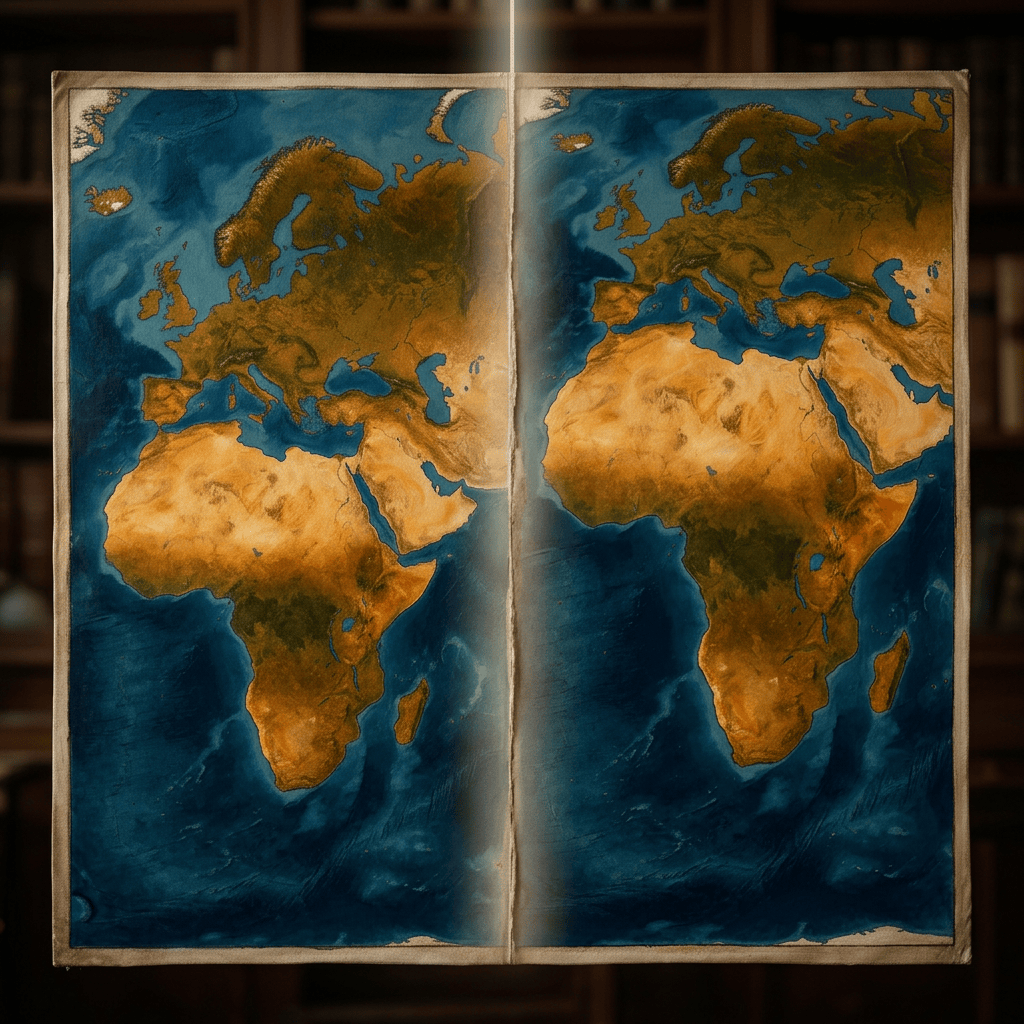
In 711 CE, under the leadership of Tariq ibn Ziyad, they crossed the Strait of Gibraltar and established Al‑Andalus, a flourishing civilisation in Iberia that lasted nearly 800 years.
What the Moors Achieved
The Moors transformed Europe in ways that are still visible today. Their contributions spanned science, architecture, agriculture, mathematics, philosophy, and culture.
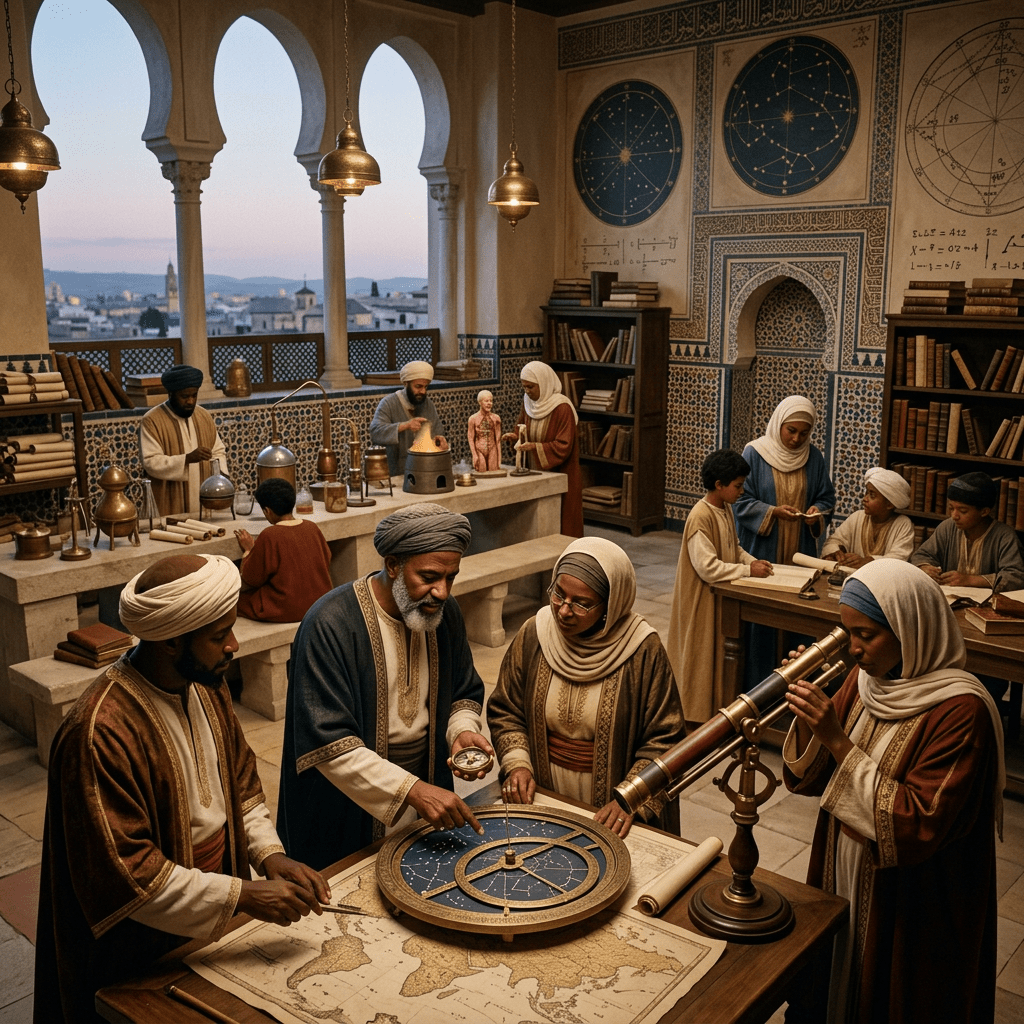
They Preserved and Expanded Knowledge
- Translated Greek, Persian, and Egyptian texts into Arabic and Latin
- Built libraries containing hundreds of thousands of books
- Advanced algebra, astronomy, medicine, and engineering
Cities like Córdoba became global centres of learning.
They Revolutionised Architecture
- Horseshoe arches
- Ornate geometric patterns
- Courtyard gardens
- Advanced irrigation systems
The Alhambra in Granada remains one of the world’s greatest architectural masterpieces.
They Introduced New Technologies
- Aqueducts and water wheels
- Street lighting
- Paved roads
- Soap manufacturing
- Surgical instruments
Europe was transformed from a largely rural, fragmented region into a more connected and technologically advanced society.
They Brought New Foods and Agriculture
- Citrus fruits
- Sugarcane
- Rice
- Almonds
- Cotton
Spain’s agricultural revolution began with Moorish innovation.
They Influenced Music, Language, and Culture
- Over 4,000 Spanish words come from Arabic (e.g., azúcar, ojalá, aceituna)
- Flamenco has deep Moorish and African roots
- European fashion, poetry, and etiquette were reshaped by Moorish culture
Evidence of Their Presence
The evidence of the Moors is overwhelming and well‑documented:
- Architecture: The Alhambra, the Great Mosque of Córdoba, Giralda Tower
- Manuscripts: Medical, mathematical, and philosophical texts preserved in Arabic
- Archaeology: Coins, pottery, irrigation systems, fortresses
- Genetics: Iberian DNA shows North African and Sub‑Saharan admixture
- Historical records: Christian, Muslim, and Jewish chroniclers all describe Moorish rule
Their influence is not speculation, it is visible in stone, language, and science.
The Controversy: Why Are the Moors Not Discussed in the Mainstream?
This is where history becomes political.
Their story challenges Eurocentric narratives
The idea that African and Muslim civilisations once led Europe in science, architecture, and governance disrupts the traditional story of European superiority.
The Reconquista rewrote history
After Christian kingdoms retook Spain, they launched a centuries‑long campaign to erase Moorish influence, including:
- Destroying libraries
- Converting mosques into churches
- Rewriting historical accounts
- Banning Arabic names, clothing, and customs
Victors write history and the Moors were not the victors.
Racial politics in later centuries
During the rise of European colonialism, it became politically inconvenient to acknowledge:
- African scientific leadership
- Black and Brown rulers in Europe
- Multicultural societies that thrived
So the narrative was simplified or erased.
Why Their Story Matters Today
The Moors remind the Afroglobal community and the world that:
- African civilisations have shaped global history
- Knowledge, innovation, and leadership are part of African heritage
- Europe was once influenced and uplifted by African and Muslim scholars
- Cultural exchange is powerful, not threatening
Their story is a counter‑narrative to centuries of erasure.
A Legacy Too Big to Hide
The Moors were not just conquerors, they were builders, scientists, philosophers, artists, and innovators. Their legacy lives in Spain’s architecture, Europe’s scientific foundations, and the global movement of ideas.
The Moors were not destroyed, they were Defeated militarily, Erased politically, Assimilated culturall and Forgotten intentionally, but their fingerprints remain everywhere.
The study of the Moors is to reclaim a truth:
African civilisations have always been central to world progress.
By George Tetteh