
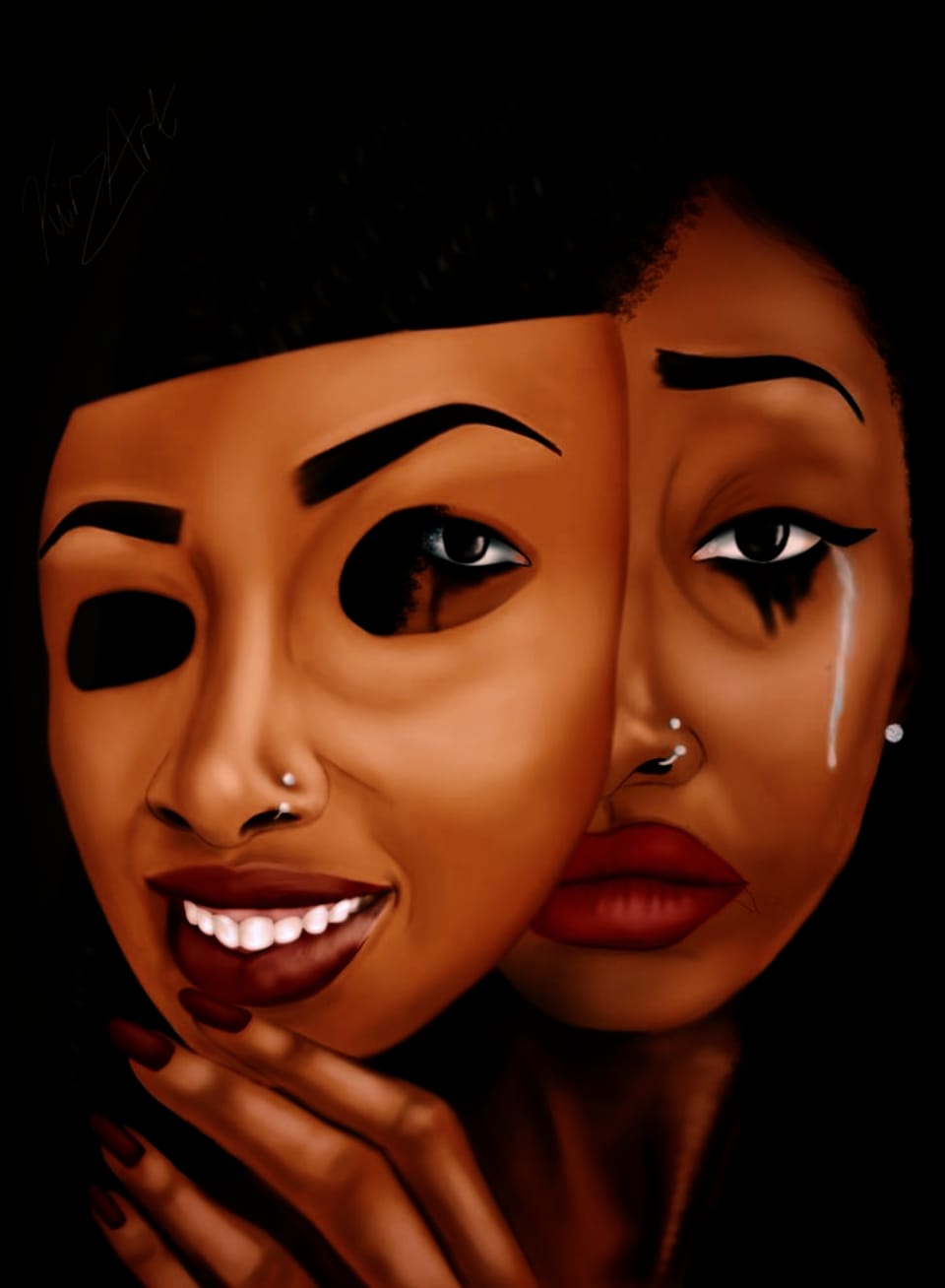
A few years ago, the internet went into meltdown over something surprisingly simple — an unfiltered photo of Khloé Kardashian. One assistant posted a natural bikini picture, and within hours lawyers were mobilised, takedown notices were issued, and the world watched as a global celebrity fought desperately to erase an image that showed her as she truly is.
The irony was impossible to ignore.
Khloé, like much of her family, has built a public empire on the language of body positivity, self‑love, and confidence. Their influence stretches far beyond Western audiences — their relationships, children, and cultural proximity have made them icons within many Afroglobal communities too. Yet even with all their wealth, fame, and power, authenticity still feels like a threat.
And if the most influential women in the world struggle to accept their unfiltered selves, what message does that send to the rest of us?
When Filters Become the New Reality
UK Afroglobal presenter Maya Jama has spoken openly about the emotional toll of filters and social media perfection. She highlights what many of us already know: the pressure to look flawless is reshaping the mental health of an entire generation.
Young people — especially young Afroglobal women and men — are growing up in a world where the line between real and edited is almost invisible. When every scroll shows sculpted bodies, poreless skin, and digitally enhanced features, self‑doubt becomes inevitable.
Authenticity is becoming a rare commodity.
The Cracks in the Illusion
We are witnessing a global crisis of identity.
People are altering, reshaping, and sometimes destroying their natural features in pursuit of an ideal that doesn’t even exist.
Extreme examples are becoming disturbingly common:
- Aviva Rocks, known as the “Human Ken Doll,” longing for rib removal at just 29.
- Rodrigo Alves — now Jessica Alves — spending nearly $1 million on surgeries, driven by body dysmorphic disorder (BDD).
These stories are not entertainment. They are warnings.
BDD is a serious mental health condition, yet many choose surgery over healing because society rewards transformation more than self‑acceptance. And while some can afford these drastic measures, others turn to dangerous shortcuts — bleaching creams, industrial chemicals, and unsafe procedures — all in the name of becoming their “authentic self.”
But authenticity cannot be bought.
It cannot be filtered.
It cannot be surgically installed.
The Afroglobal Truth: Our Beauty Has Always Been Enough
Our communities have long battled with imposed beauty standards — lighter skin, straighter hair, slimmer noses, smaller waists. These pressures didn’t start with Instagram, but social media has amplified them to a deafening level.
Yet our cultures have always known a deeper truth:
Beauty is not perfection. Beauty is identity. Beauty is heritage. Beauty is truth.
When we alter ourselves to fit someone else’s ideal, we lose the very essence that makes Afroglobal beauty powerful — its diversity, its richness, its history.
A Call to Reclaim Authenticity
The world is changing. The filters are slipping. The cracks in the illusion are widening. And this moment calls for something bold:
A return to self.
A return to truth.
A return to the Afroglobal understanding that worth is not measured in likes, edits, or enhancements — but in character, culture, and confidence.
We must teach our young people that their value is not found in comparison.
We must remind our communities that their features are not flaws.
We must challenge a society that profits from insecurity.
Because the real “freakishness” is not in those who alter themselves — it is in a world that convinces them they must.
By Georgina Tuffour

 Your Magazine
Leave a comment